Reusing turbine blades : the winds of change
  • Publish On 1 August 2024
  • Minh Nguyễn, Yoann Malinge
  • 5 minutes

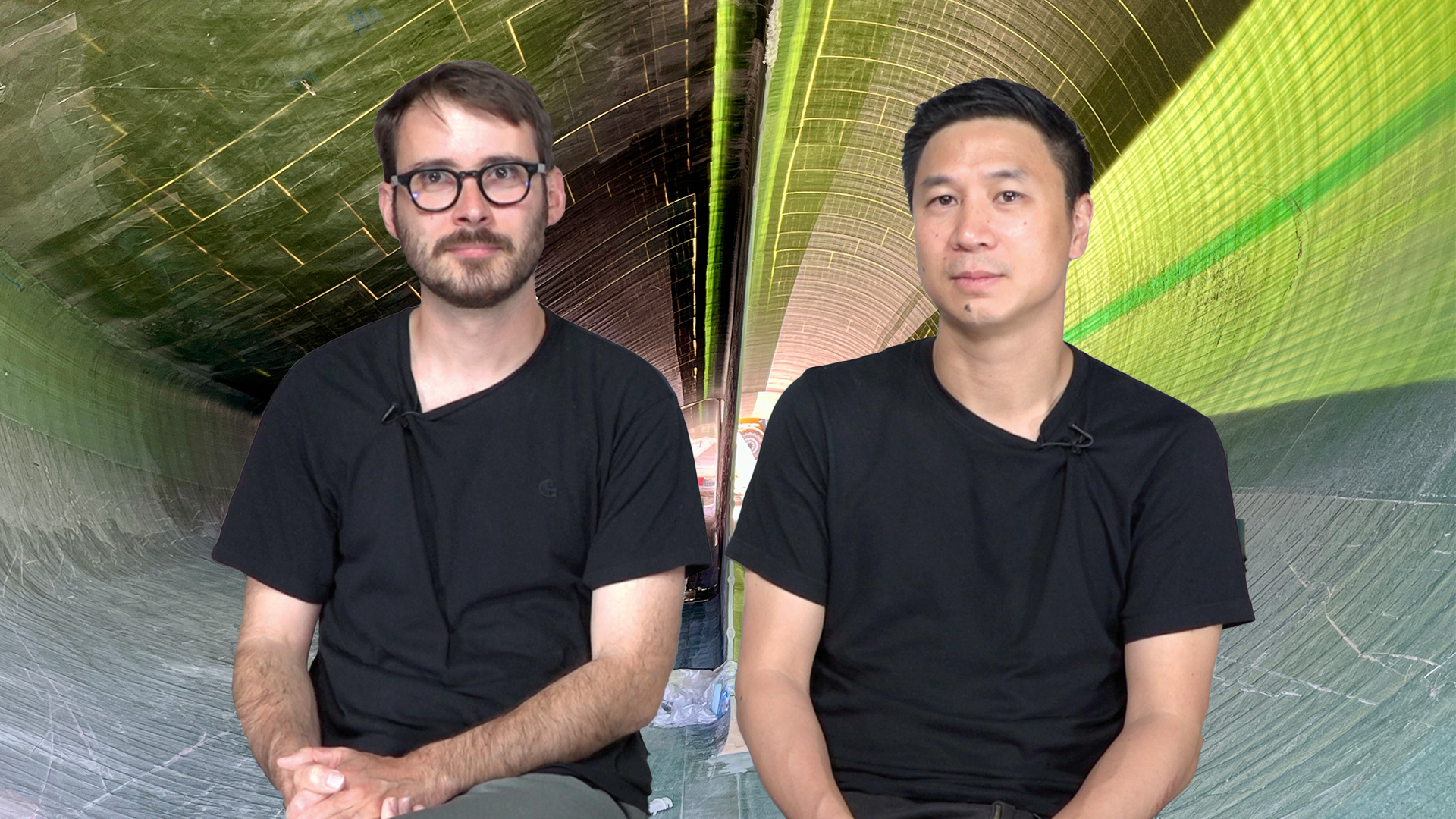
The growth in energy consumption and the obsolescence of our infrastructures suggest that by 2030, we’ll have a stock of 60,000 tonnes of end-of-life wind turbines per year. To absorb this material on an industrial scale, we need to invent new ways of producing, consuming and building. With this in mind, the La Paletière project aims to reuse turbine blades – composite materials with multiple properties – by turning them into roofing elements.
Bibliography

explore

Vidéo

Björn Geldhof

Vidéo

Culture as a weapon

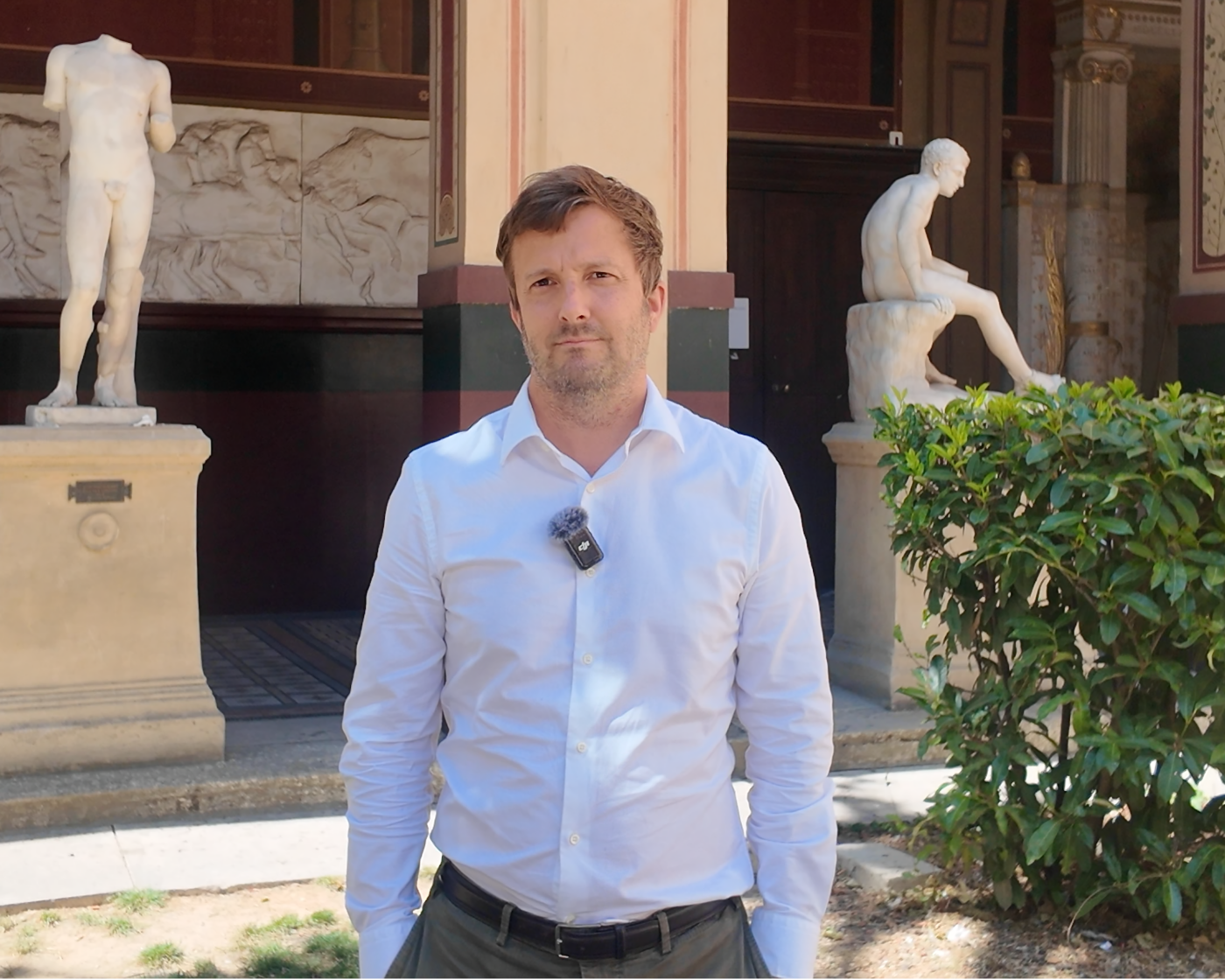
In this exclusive interview, Björn Geldhof, director of the PinchuckArtCentre in Kyiv, looks at the evolution of the centre’s cultural programming since the outbreak of war in Ukraine. From an institutional space whose primary role was to open up the country to the world, the centre has evolved into a platform for committed and activist research, carrying the voice of Ukraine throughout Europe. By using art to document the conflict, the PinchukArtCentre uses a factual approach to raise awareness in the spheres of opinion and decision-making, thus affirming its role as the country’s ‘artistic arm’.  

Discover
Vidéo

Matthieu Duperrex

Vidéo

Inhabiting Sentinel Landscapes

A philosopher and senior lecturer at the National School of Architecture of Marseille, Matthieu Duperrex explores ‘sentinel landscapes’—polluted soils, engineered rivers, industrial port zones—from a decolonial, multidisciplinary perspective attentive to the various ways of narrating the damaged world we have inherited. He regards these sites both as places of warning and as spaces of knowledge.

Discover
Vidéo

Jean-Baptiste de Froment

Vidéo

"For an open architecture"

On the occasion of its integration into the Paris Sciences et Lettres (PSL) university consortium, the École nationale supérieure d’architecture de Paris-Malaquais is publishing a manifesto that asserts its institutional positioning. Far more than a mere text, this manifesto lays the foundations for a committed academic vision, emphasizing the urgent need to train architects engaged in transforming the ways we inhabit the world. Structured around twelve key concepts, it is intended as a compass to guide the school’s pedagogical and strategic choices, in alignment with the 2025–2029 National Strategy for Architecture. In this interview, its director, Jean-Baptiste de Froment, reflects on the values driving this project and on how the school positions itself as a proactive agent of thought and action within the contemporary architectural landscape.

Discover
Podcast

“ My research question was: How do tools for integrating biodiversity into urban and architectural projects contribute to shaping multi-species urban worlds? ”

Translating biodiversity

Léone-Alix Mazaud

Podcast

“ My research question was: How do tools for integrating biodiversity into urban and architectural projects contribute to shaping multi-species urban worlds? ”


Translating biodiversity

In this first episode, Léone revisits the genesis of her research topic and traces the evolution of her methodology. She adopts a “material semiotics” approach, focused on how biodiversity tools translate and make ecological knowledge perceptible. These tools are analyzed as “cosmograms,” according to John Tresch’s concept: objects designed to summarize the order of the world by materially organizing the relationships between humans and non-humans. But an examination of the diversity of these tools quickly reveals the difficulty in producing shared representations of biodiversity. This heterogeneity opens an investigation into the often implicit ways in which these tools shape our thinking and conceptions of the multi-species city.   Working with diversity: Operators sensitive to non-human life in urban and architectural projects In this series of four podcasts, we invite you to delve into the work of Léone, a researcher at the agency, who recently defended her CIFRE PhD thesis in Science and Technology Studies, supervised by Jérôme Denis at the Centre for the Sociology of Innovation (École des Mines, Université PSL). A series presented by Léone-Alix Mazaud and Jasmine Léonardon. Editing: Théa Lingrand.

Discover
Podcast

“ Artificial intelligence is revolutionizing our relation to history, giving us access to previously indecipherable archives. ”

Using AI to tell history

Raphaël Doan

Podcast

“ Artificial intelligence is revolutionizing our relation to history, giving us access to previously indecipherable archives. ”


Using AI to tell history

On February 10 and 11, France hosted the Summit for Action on Artificial Intelligence, bringing together international companies and heads of state to identify the potential and limits (notably environmental) of this tool. This is an opportunity for us to discuss the subject of generative AI with Raphaël Doan, a specialist in the sciences of Antiquity and author of the uchronia Si Rome n’avait pas chuté (If Rome hadn’t fallen), an essay imagining, with the help of AI, what might have happened if the Industrial Revolution had taken place under the Roman Empire. Through this experiment, fascinating possibilities for historical and archaeological research are outlined, as AI facilitates the processing of archives, the translation of lost languages and the deciphering of burnt texts. Read here the transcription of our interview with Raphaël Doan

Discover
Article
Article

Reshaping myths to reveal pressing realities

Ashfika Rahman is a visual artist based in Bangladesh, who recently won the Future Generation Art Prize awarded by the PinchukArtCentre in Ukraine. Faced with the overwhelming power of information systems that are serving dominant narratives, she is working on creating alternative medium of expression, giving their voice back to marginalized communities in her homeland, particularly women. Through her art, Rahman questions myths, folk tales and widely spread prejudice that are still shaping our cultures and legitimating violence, adopting a contemporary and feminist lense. We met with her to discuss her recent work, Behula These Days where she brings together ancient crafts and new techniques to share the poignant and heart-wrenching experiences of women living in one of the most floodprone areas in Bangladesh.

Discover
Podcast

“ Architecture has a unique relationship with the transformation of reality: it is, in a way, atlastic. ”

Podcast

“ Architecture has a unique relationship with the transformation of reality: it is, in a way, atlastic. ”


Architecture is a political practice

Manuel Bello Marcano is an architect, lecturer at ENSA Saint-Etienne and sociologist of the imaginary at the Centre d’études pour l’actuel et le quotidien – CEAQ, Université Paris Descartes (Center for Current and Everyday Studies at Paris Descartes University). In his view, architecture is an act of aggregation designed to put the world in order: in this sense, he is interested in the political fictions mobilized to equip our thinking and, in this case, to build a “ togetherness ”. Follow his words and discover animality understood as community.

Discover
Article

Capturing the Cityscape Through Photography

Émilie d'Orgeix, Corinne Feïss-Jehel, Pierre-Jérôme Jehel

Article

Capturing the Cityscape Through Photography

Over the span of several months, students from GOBELINS Paris scouted La Défense, examining the iconic business district from the fresh perspective of urban metabolism. As part of a documentary workshop led by Pierre-Jérôme Jehel and Laetitia Guillemin (GOBELINS) and designed in partnership with researchers from the City-Metabolism Chair at PSL University, some thirty students explored this territory. They did so by treating it not as a mere backdrop but as a living organism, traversed by flows, tensions, and rhythms, using photography as a tool for revelation. Their projects, located at the crossroads of artistic creation and research, unveil an alternative reading of this mineral space, between invisible flows and underlying tensions. Both sensitive and rigorous, this inquiry is chronicled here by Corinne Feïss Jehel (EPHE-PSL), Pierre-Jérôme Jehel, and Émilie d’Orgeix (EPHE-PSL) as part of a research project conducted by the City-Metabolism Chair (which is financially supported by PCA-STREAM, Artelia, and Groupama Immobilier).

Discover