An Attempt to Drain Places

  • Publish On 25 February 2021
  • Larissa Fassler
  • 6 minutes

Larissa Fassler is a “Neo-Situationist” artist. By exploring places over the course of many hours, she gleans their ephemeral essence, which she then superimposes on the fixed urban master plan. The subjective maps thus generated highlight both urban narratives and history.
Bibliography

explore

Article
Article

Educating Citizen Architects: for a meaningful architecture

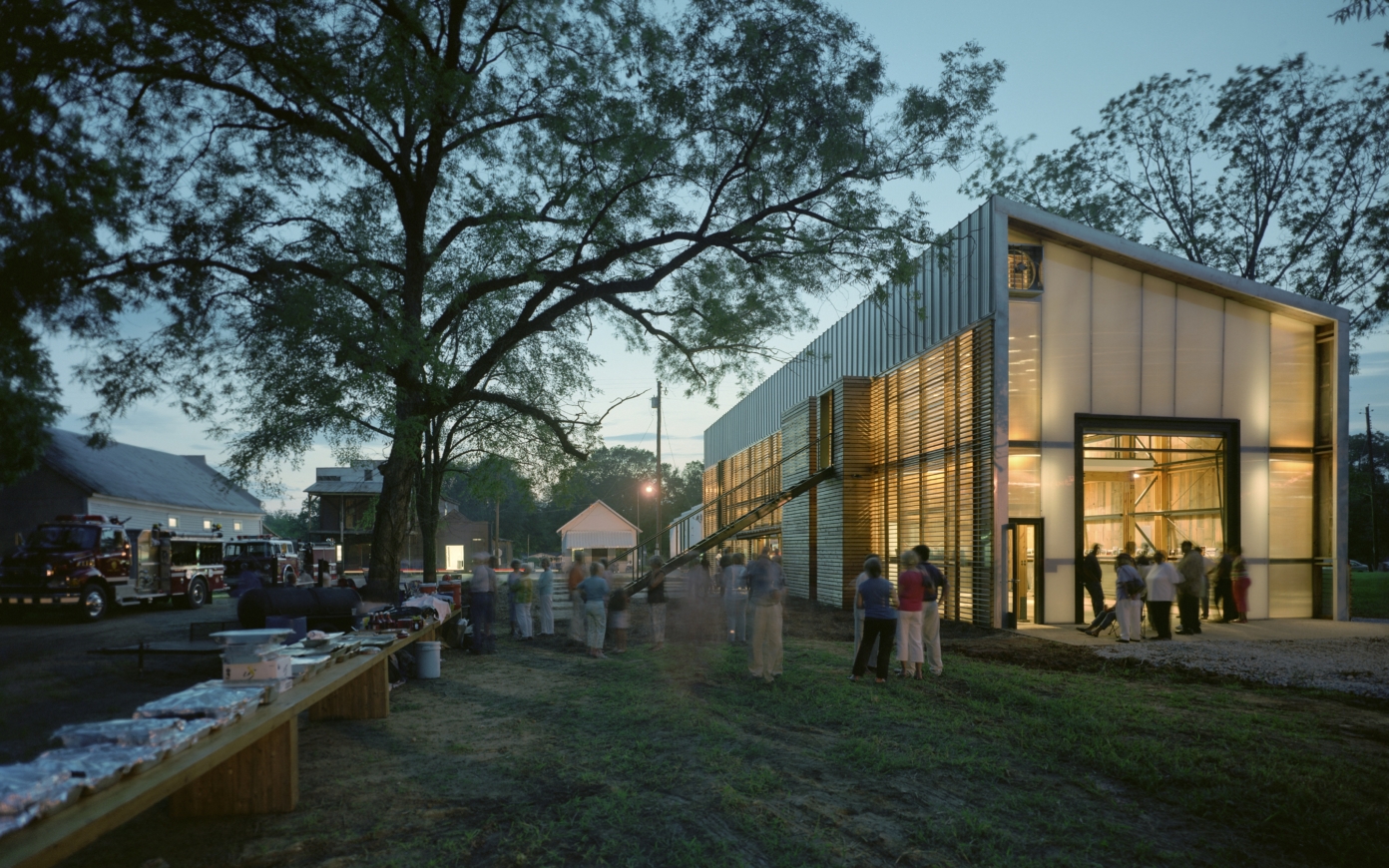
Andrew Freear runs the Rural Studio program at Auburn School of Architecture (USA). He believes that schools of architecture have an ethical responsibility to train citizen architects who are locally committed to concrete projects and experientially connected to contexts and places. To design an inclusive city, the Studio adopts an experimental field approach, combining analysis of the territory’s endemic problems, understanding of residents’ needs and new construction techniques. Read the full interview published in STREAM 05!

Discover
Podcast

“ A catastrophe is when a belief or certitude suddenly collapses. From its ruins, narrative, political, economic and ecological utopias can be reborn. ”

Podcast

“ A catastrophe is when a belief or certitude suddenly collapses. From its ruins, narrative, political, economic and ecological utopias can be reborn. ”


Can new narratives arise from ruins?

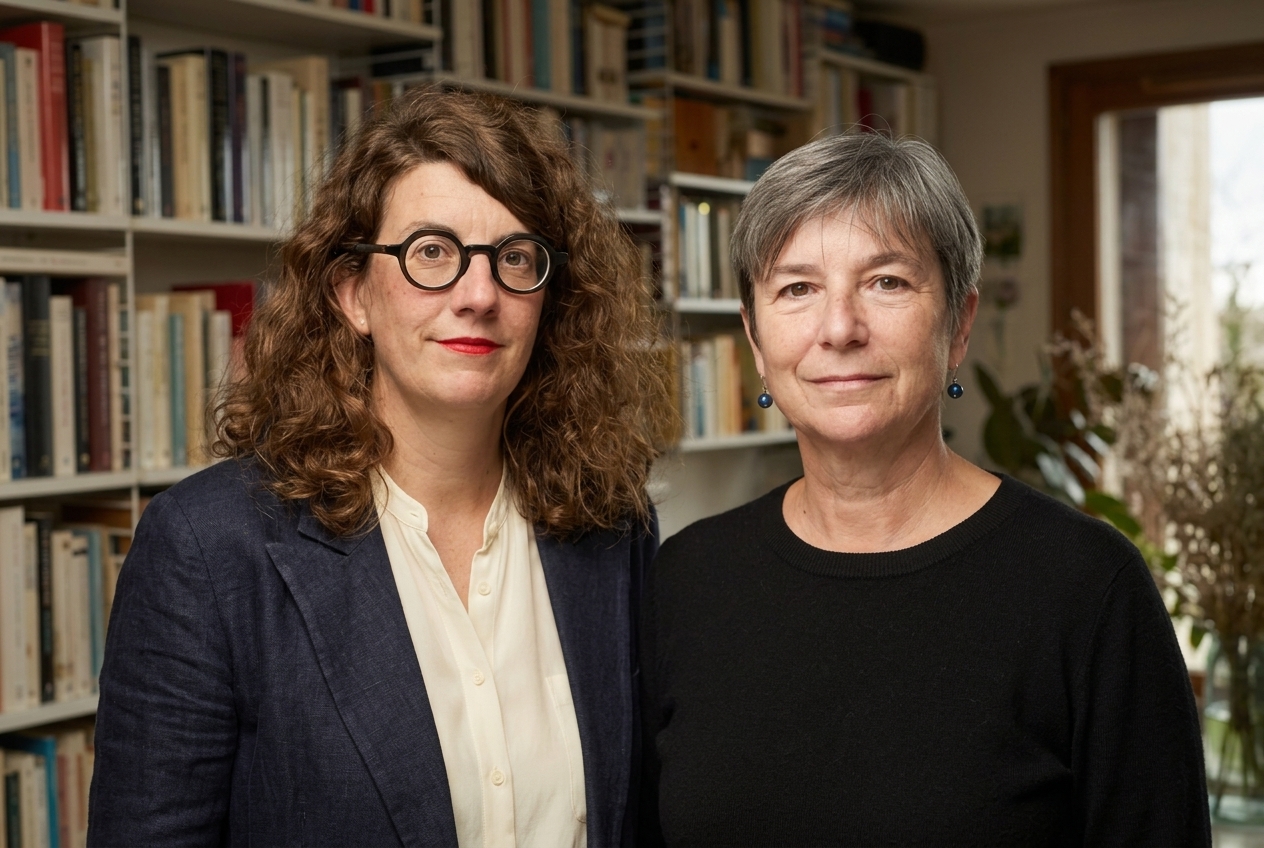
Raphaëlle Guidée is a specialist in narrative representations of economic, environmental and societal collapse. For over 10 years, she has analyzed the narratives surrounding Detroit’s bankruptcy in order to understand how an apparent ruin of capitalism can inspire discourses of domination or resistance. In La ville d’après : Détroit, une enquête narrative [The Aftermath City: Detroit, a narrative investigation] (Flammarion), rather than focusing on fictions, she seeks out testimonies and concrete stories, believing that modern times don’t need new narratives. We simply need alternative narratives. Read the transcription of the podcast.

Discover
Article
Article

Using AI to tell history — podcast transcription

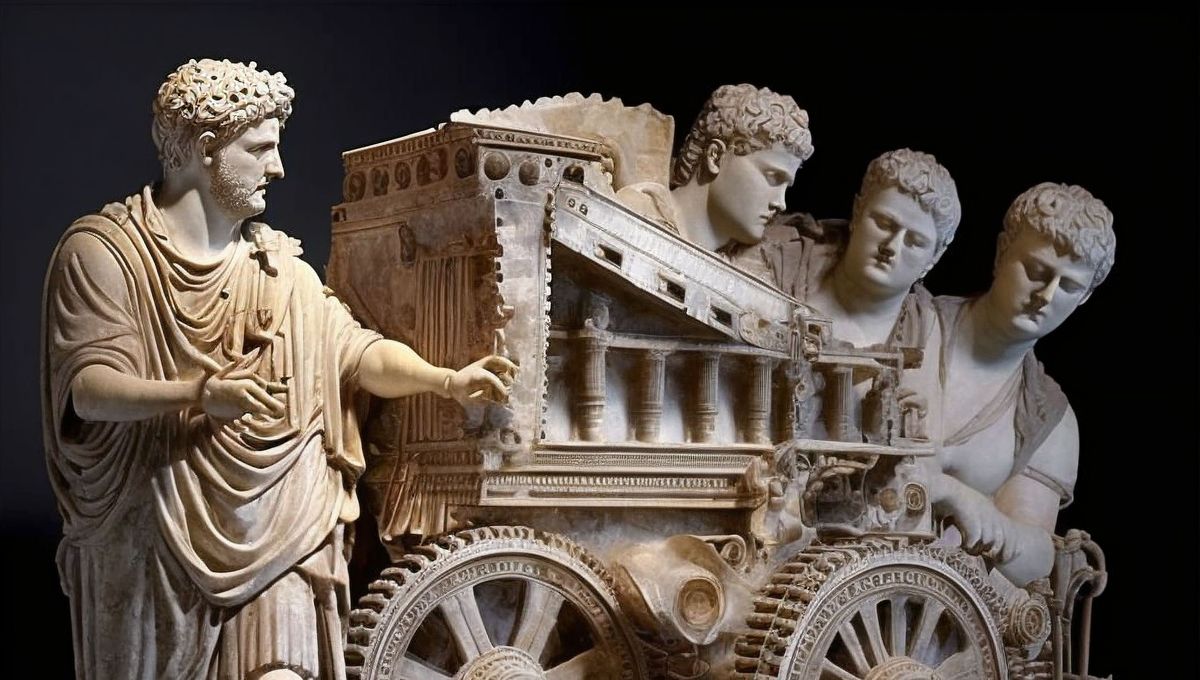
Read our discussion on the subject of generative AI with Raphaël Doan, a specialist in the sciences of Antiquity and author of the uchronia Si Rome n’avait pas chuté (If Rome hadn’t fallen), an essay imagining, with the help of AI, what might have happened if the Industrial Revolution had taken place under the Roman Empire. Through this experiment, fascinating possibilities for historical and archaeological research are outlined, as AI facilitates the processing of archives, the translation of lost languages and the deciphering of burnt texts.

Discover
Podcast

“ Artificial intelligence is revolutionizing our relation to history, giving us access to previously indecipherable archives. ”

Using AI to tell history

Raphaël Doan

Podcast

“ Artificial intelligence is revolutionizing our relation to history, giving us access to previously indecipherable archives. ”


Using AI to tell history

On February 10 and 11, France hosted the Summit for Action on Artificial Intelligence, bringing together international companies and heads of state to identify the potential and limits (notably environmental) of this tool. This is an opportunity for us to discuss the subject of generative AI with Raphaël Doan, a specialist in the sciences of Antiquity and author of the uchronia Si Rome n’avait pas chuté (If Rome hadn’t fallen), an essay imagining, with the help of AI, what might have happened if the Industrial Revolution had taken place under the Roman Empire. Through this experiment, fascinating possibilities for historical and archaeological research are outlined, as AI facilitates the processing of archives, the translation of lost languages and the deciphering of burnt texts. Read here the transcription of our interview with Raphaël Doan

Discover
Vidéo
Vidéo

Beautiful like an encounter on the glass roof of colored clouds

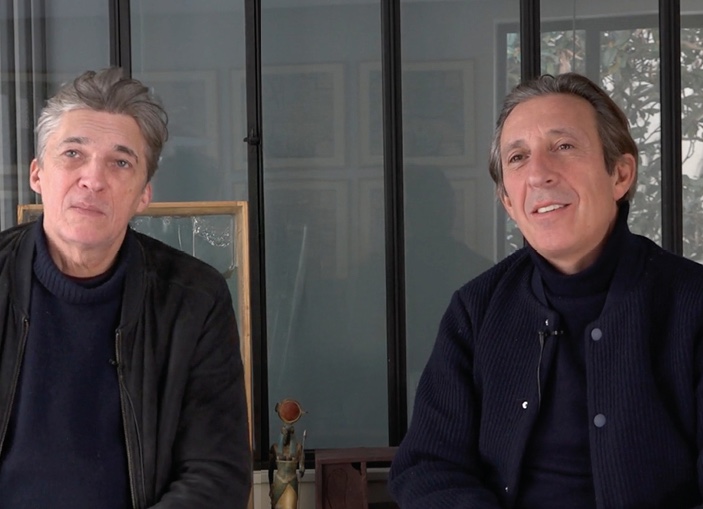
For Daniel Buren, architecture is an open-air studio. In an exclusive interview with architect Philippe Chiambaretta, he talks about his site-specific work, where art and architecture meet, just like the Nuages Colorés that cover the scales of the 175 Haussmann glass roof.

Discover
Article
Article

Podcast transcription: Raphaëlle Guidée

Raphaëlle Guidée is a specialist in narrative representations of economic, environmental and societal collapse. For over 10 years, she has analyzed the narratives surrounding Detroit’s bankruptcy in order to understand how an apparent ruin of capitalism can inspire discourses of domination or resistance. In La ville d’après : Détroit, une enquête narrative [The Aftermath City: Detroit, a narrative investigation] (Flammarion), rather than focusing on fictions, she seeks out testimonies and concrete stories, believing that modern times don’t need new narratives. We simply need alternative narratives. Read the transcription of her podcast below.

Discover
Podcast

“ My research question was: How do tools for integrating biodiversity into urban and architectural projects contribute to shaping multi-species urban worlds? ”

Translating biodiversity

Léone-Alix Mazaud

Podcast

“ My research question was: How do tools for integrating biodiversity into urban and architectural projects contribute to shaping multi-species urban worlds? ”


Translating biodiversity

In this first episode, Léone revisits the genesis of her research topic and traces the evolution of her methodology. She adopts a “material semiotics” approach, focused on how biodiversity tools translate and make ecological knowledge perceptible. These tools are analyzed as “cosmograms,” according to John Tresch’s concept: objects designed to summarize the order of the world by materially organizing the relationships between humans and non-humans. But an examination of the diversity of these tools quickly reveals the difficulty in producing shared representations of biodiversity. This heterogeneity opens an investigation into the often implicit ways in which these tools shape our thinking and conceptions of the multi-species city.   Working with diversity: Operators sensitive to non-human life in urban and architectural projects In this series of four podcasts, we invite you to delve into the work of Léone, a researcher at the agency, who recently defended her CIFRE PhD thesis in Science and Technology Studies, supervised by Jérôme Denis at the Centre for the Sociology of Innovation (École des Mines, Université PSL). A series presented by Léone-Alix Mazaud and Jasmine Léonardon. Editing: Théa Lingrand.

Discover
Vidéo
Vidéo

Bringing together an architectural project and a collection project 

L’agence PCA-STREAM dirigée par l’architecte Philippe Chiambaretta a signé en 2006 le projet de réhabilitation d’un immeuble tertiaire destiné à accueillir le tout nouveau Centre d’Art Contemporain de Kiyv. Le projet architectural s’est construit en parallèle du positionnement éditorial et de la constitution de la collection, en collaboration étroite avec le mécène du projet Viktor Pinchuk et le curateur Nicolas Bourriaud. Retour sur la genèse de ce projet ambitieux, destiné à ouvrir l’Ukraine sur le Monde.

Discover