Archaeology of disaster: towards a rewriting of oblivion
- Publish On 29 May 2026
- Joana Hadjithomas & Khalil Joreige
- 5 minutes
The Lebanese artist duo Joana Hadjithomas & Khalil Joreige are presenting a body of work this year under the title Unconformities: What Lies Beneath Our Feet. Through this term, borrowed from geology, they reveal the heart of their artistic practice, which explores the traces buried beneath the city’s accumulated layers. Basements become a realm of memory and narrative, marked by the traces of conflict, climatic hazards and human activity. To mark their exhibition at the 2026 Venice Biennale, we revisit the practice of these two visual artists and filmmakers, with whom PCA-STREAM has maintained a dialogue for many years, enriched by encounters and intellectual affinities.
Giving voice to upheaval
The artistic practice of Joana Hadjithomas and Khalil Joreige is rooted in Lebanon’s tumultuous history. Marked by civil wars, then more recently by the explosion at the Port of Beirut and, most recently, by Israeli bombardments, the artists have seen their careers shaped by a succession of crises, destruction and regeneration. Shaped by this constant instability, their work explores fragility and catastrophe. In this close relationship with rupture, their cinematic and artistic productions have, for over twenty-five years, sought to reveal and reconfigure the traces left by the upheavals of time, the fragmented narratives they produce, and the buried forms of memory.
The ground—and even more so the subsoil—constitutes a veritable reservoir of traces. Through the accumulation of geological strata, it preserves the episodes of history: its cycles, its ruptures, but also its recompositions. The layers are deposited in chronological order until a major upheaval—geological movements, natural disasters, war, construction work or backfilling—alters their continuity and reorganises their temporalities. Archaeology then becomes a means of bringing these silent scars to the surface; it opens a breach through which buried narratives re-emerge.
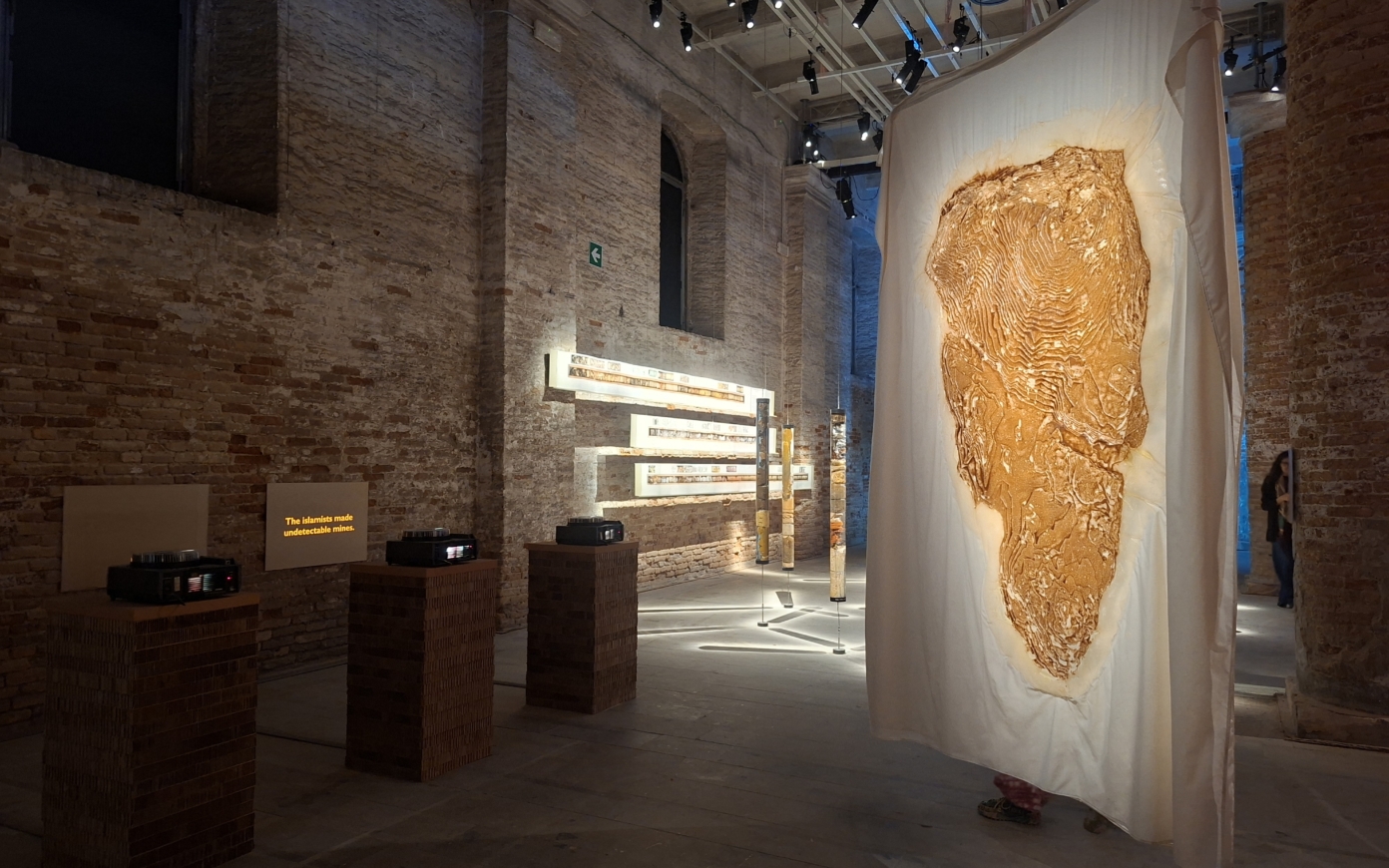
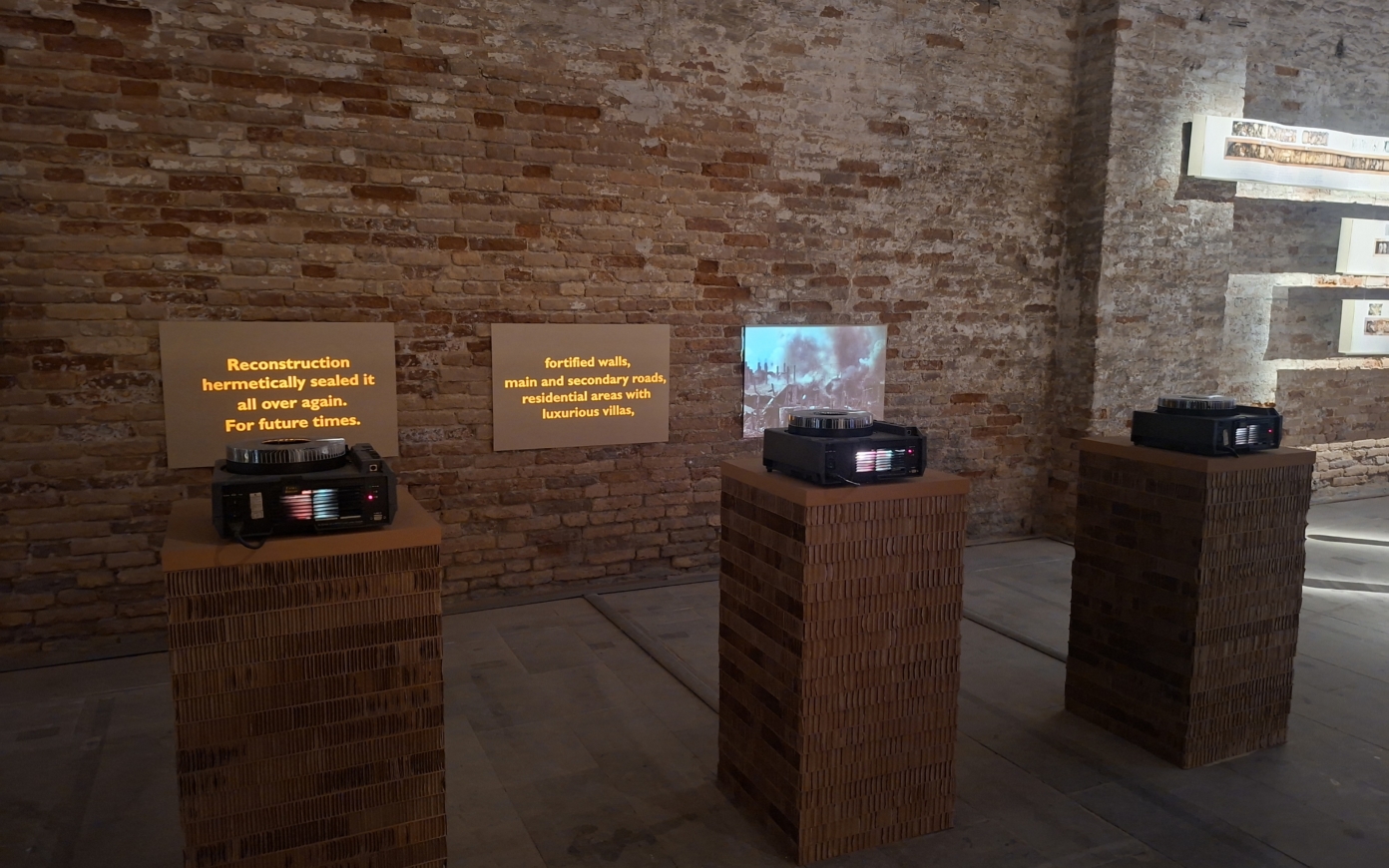
Under the Cold River Bed, 2020
Guided by archaeologists, the artists present the history of the Nahr el-Bared Palestinian refugee camp, where a Roman settlement was discovered following the camp’s destruction in 2007. The work consists of sculptural forms that echo the site’s red earth, a slideshow of images, and testimonies recounting population displacements, military conflicts and archaeological discoveries.
Message with(out) a code, 2016
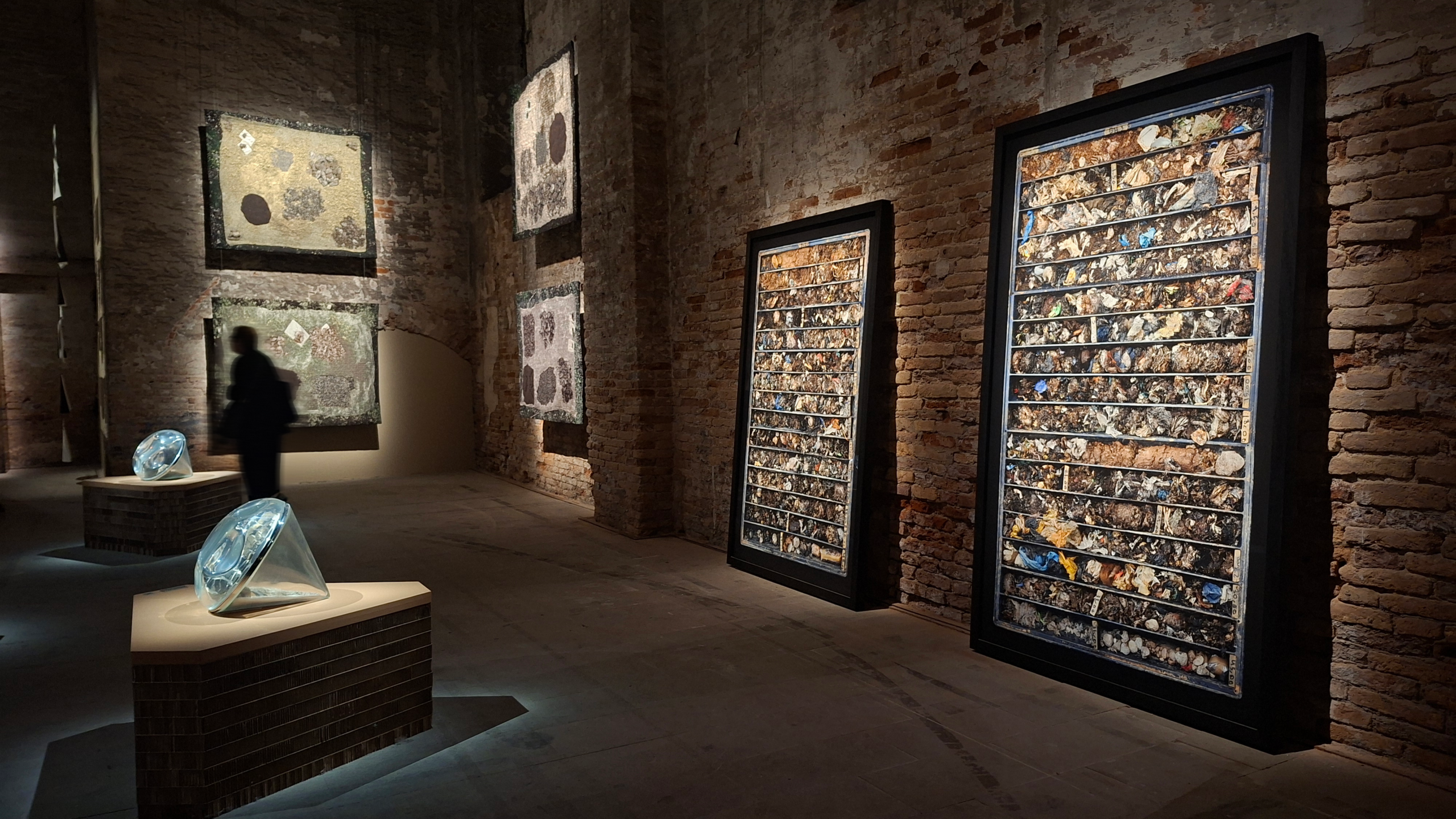
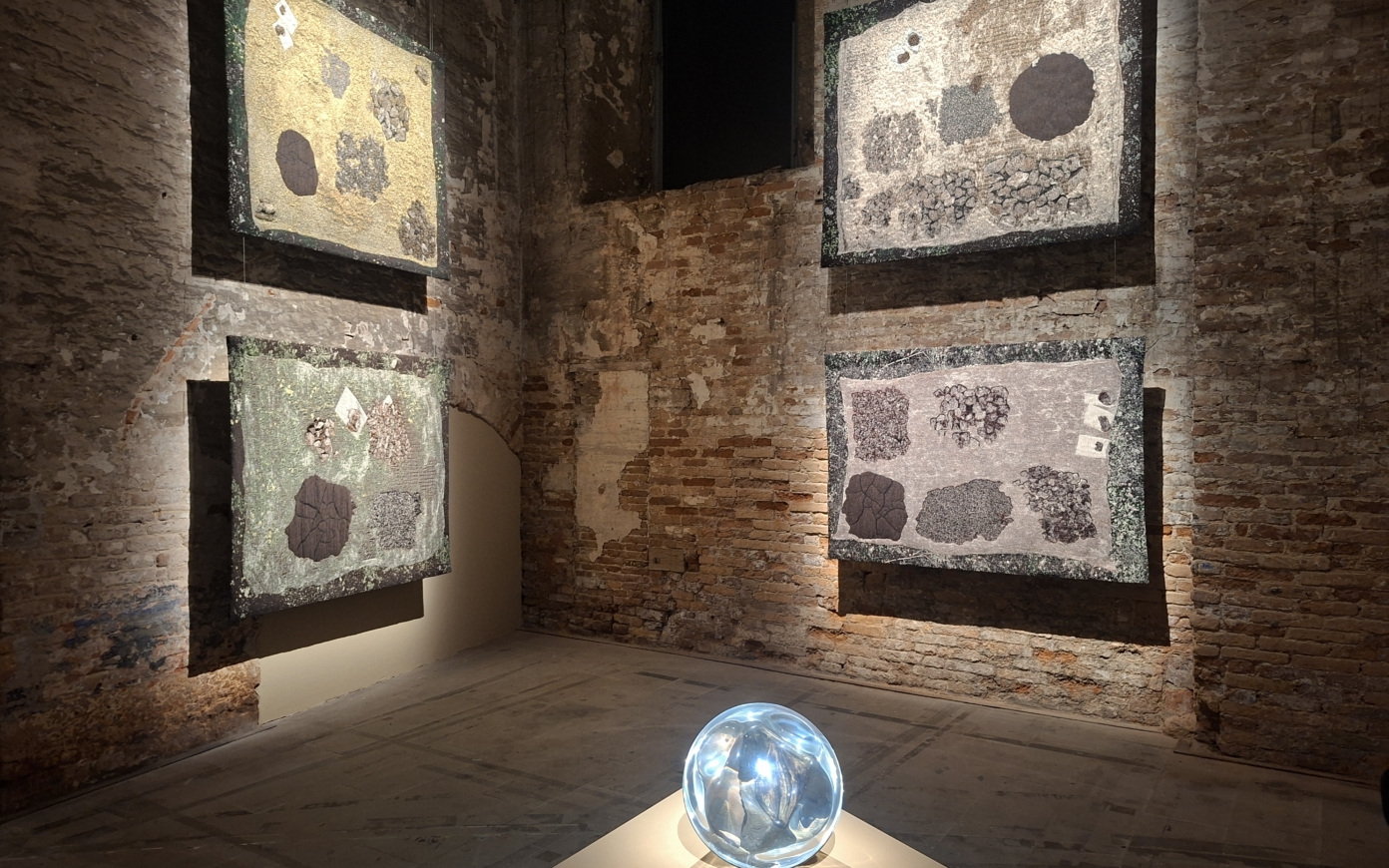
During archaeological excavations at a prehistoric site, remains of human activity were collected and catalogued. The artists photographed these arrangements and exhibited the images in their studio in Beirut, before they were destroyed by the port explosion in 2020. Rather than making new prints of these images, they chose to transpose them into tapestries so that the weaving would tell the story of this loss.
An Autopsy of the Earth’s Innards
The duo’s practice draws heavily on the sciences. At the heart of their approach, the study of soils brings together interdisciplinary knowledge to examine the geological formations at work, to decipher these materials and the temporalities they contain. The artists therefore surround themselves with archaeologists, geologists and historians. A form of acculturation to the methods and practices of scientific inquiry takes place and becomes fully integrated into their approach. Excavation, indexing, archiving: these are all practices and terms that feature in their works.
Their work, however, is neither a scientific survey nor an archaeological document. Geological strata become, above all, the material for a new narrative. By unravelling them, the artists seek not so much to establish a truth as to make buried memories perceptible. The challenge lies precisely in giving form to that which escapes the gaze. The question then becomes one of representation. How can we make the invisible visible, and bring to life what remains buried? It is in this gap between scientific knowledge and poetic construction that their work takes on its full significance, at the intersection of art, archaeology and narrative.
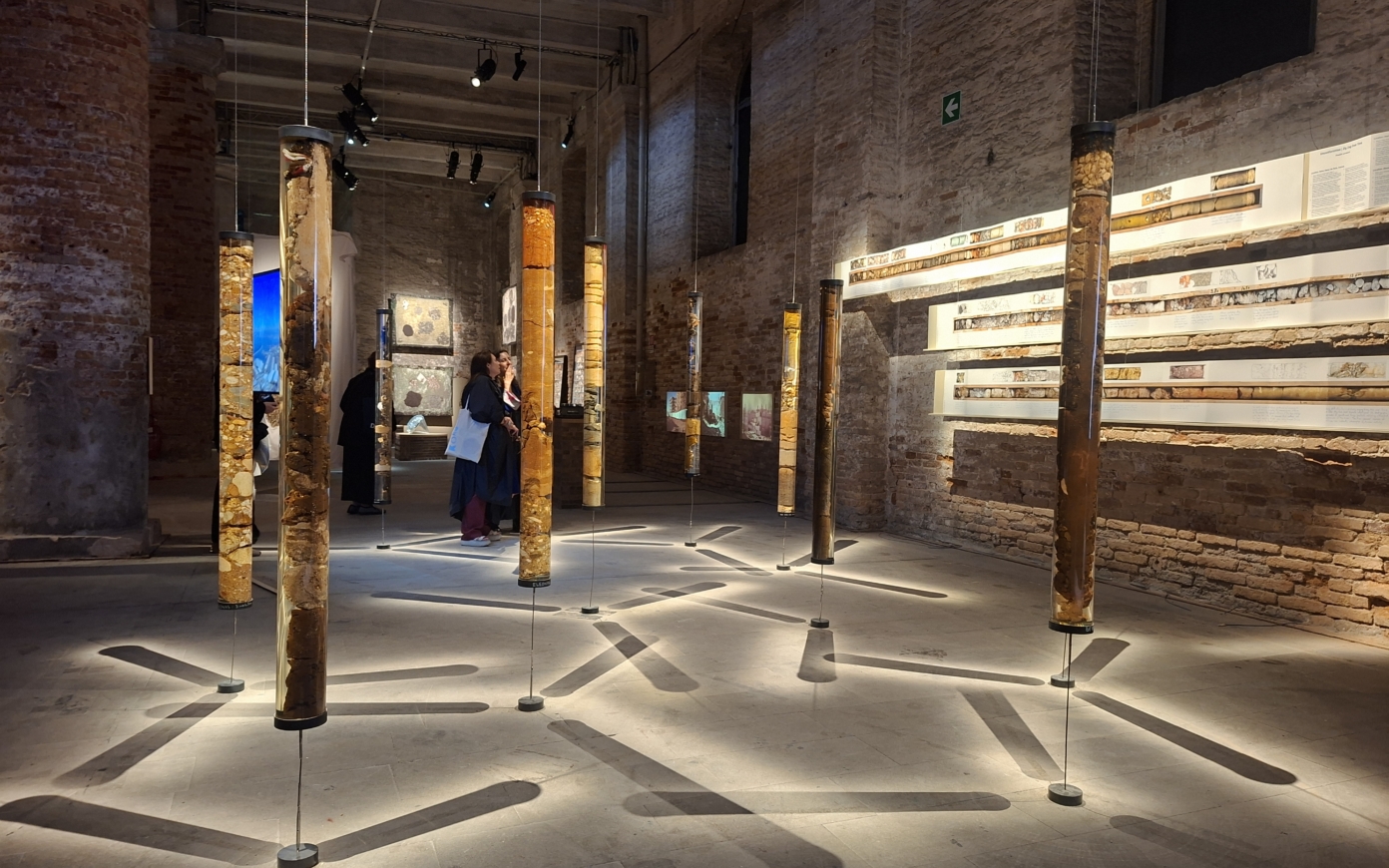
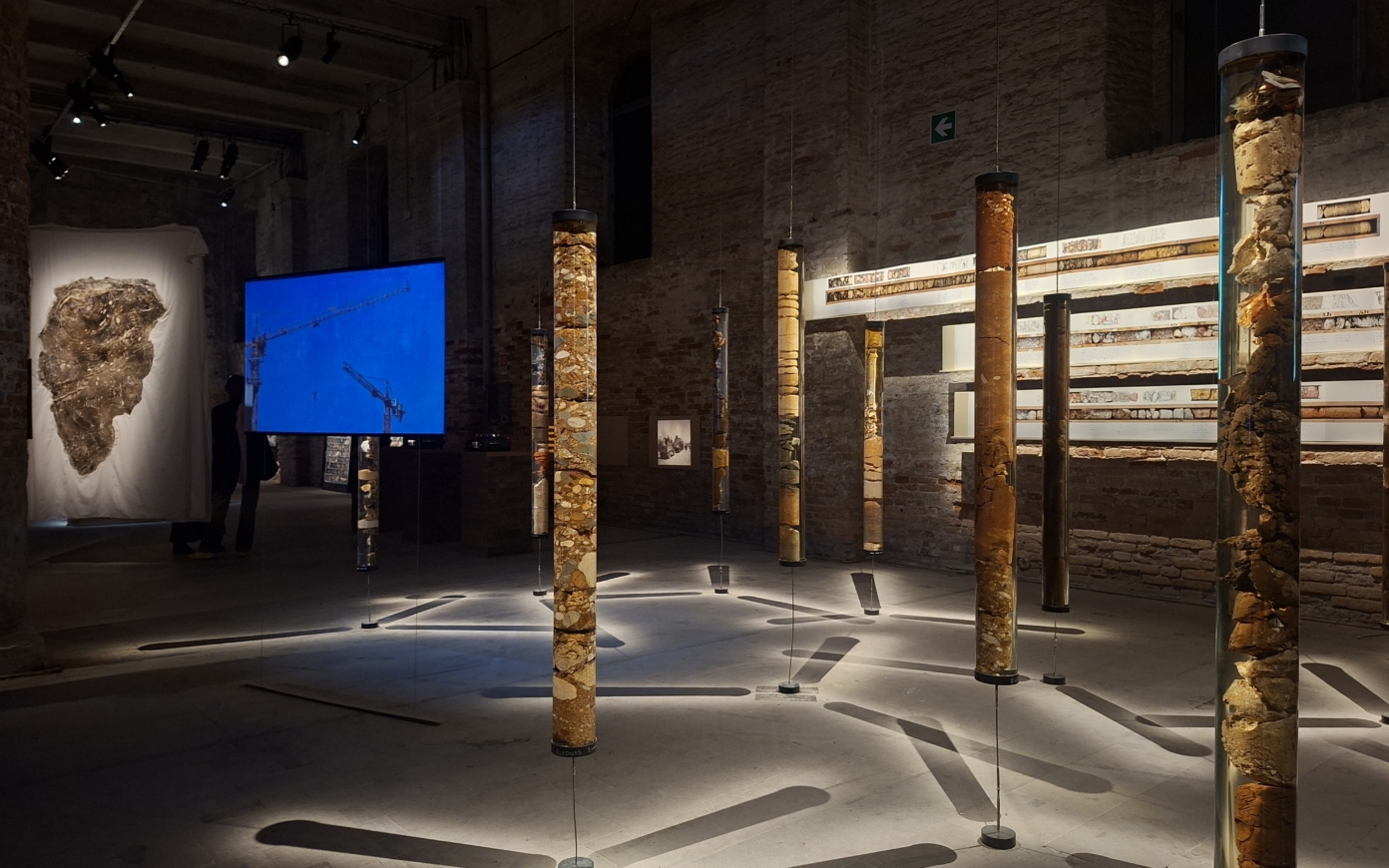
Time Capsules, 2017
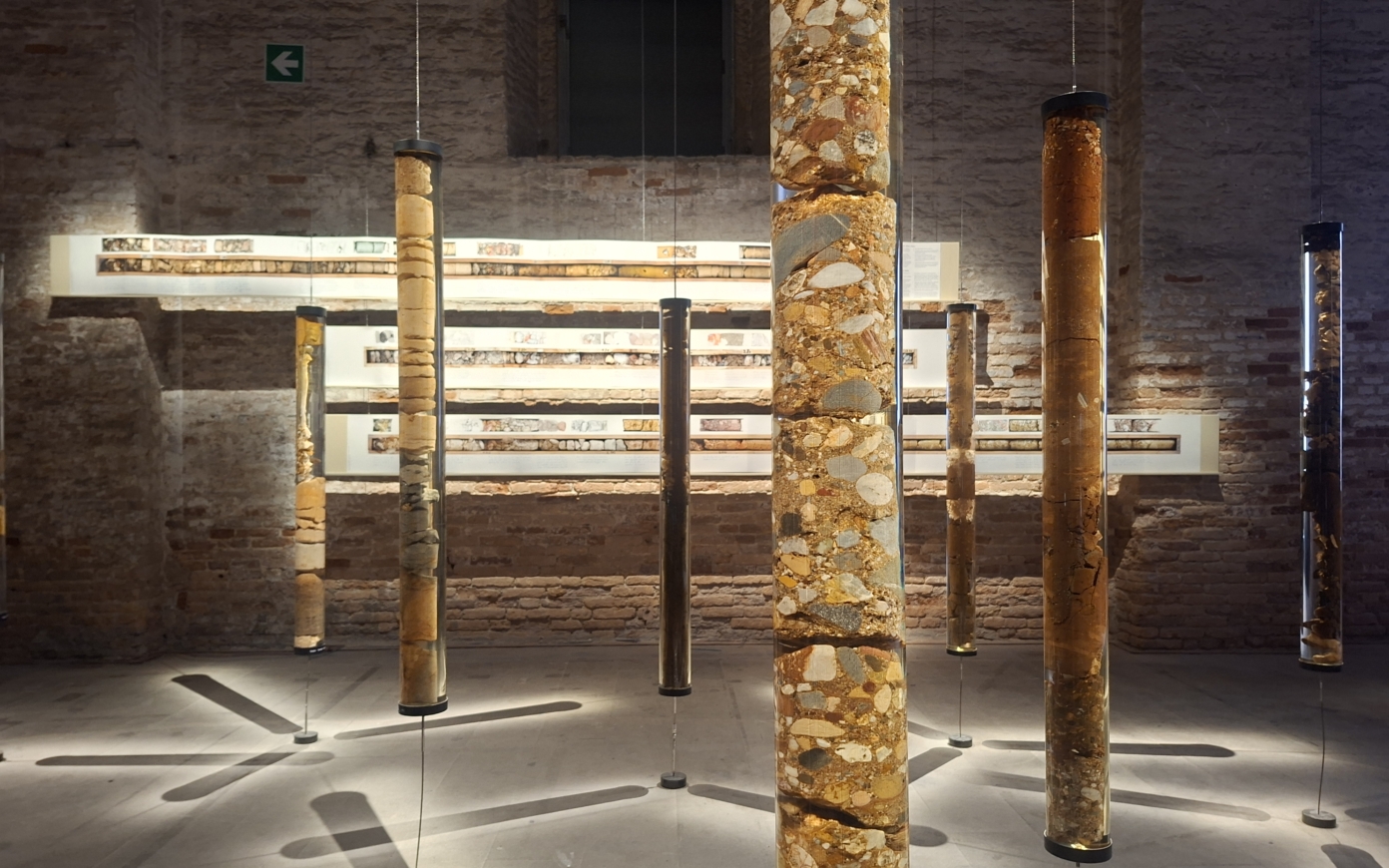
The artists collected drill cores from construction sites — which are usually discarded — extracted from the subsoil of cities chosen for their historical and personal significance — Beirut, Eleonas in Greece and Paris — which they then re-sculpted. History does not unfold as a coherent succession of chronological layers, but rather as a dynamic entanglement of eras marked by ruptures, where traces and civilisations intertwine.
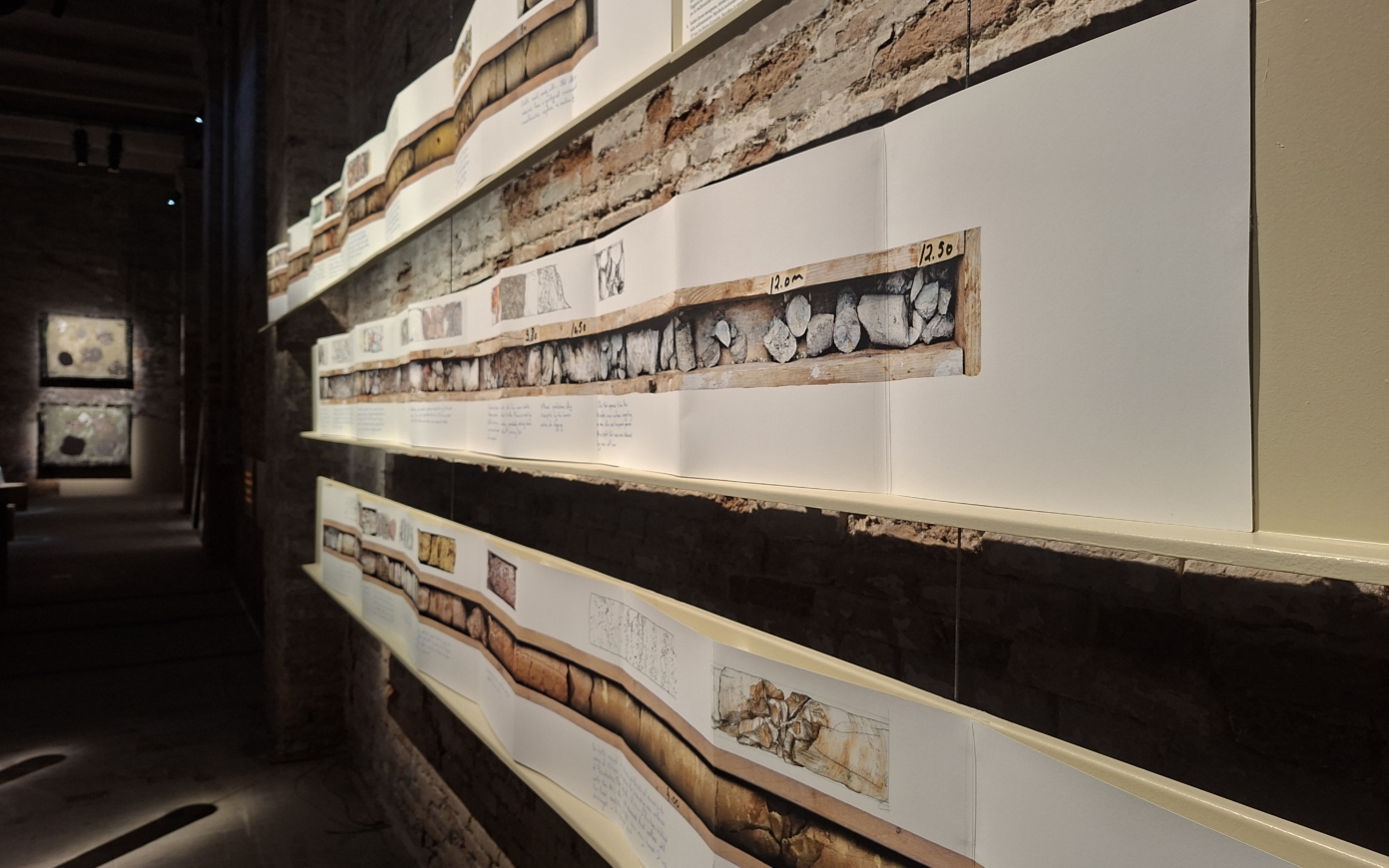
Zig Zag Over Time, 2018
Photographs, drawings and texts form a timeline in which history is no longer depicted as overlapping layers but as a succession of events. It places particular emphasis on wars and natural disasters, which abruptly interrupt the flow of time, which then resumes further down on another timeline.
Reconstructing narratives
For Khalil Joreige and Joana Hadjithomas, this underground exploration is conceived as a critical tool, a counter-reading of historical time. Unconformities does not merely unearth the vestiges of time; the work reconstructs our interpretation of it. In the same way that filmmakers recombine a film’s rushes, the strata, traces and excavations become the elements of an artistic composition that is not chronologically linear but follows its own narrative logic. The core samples from Time Capsules, for example, are reassembled according to the geological episodes that the artists choose to reveal or, conversely, to keep in the shadows. Through this gesture, they retell the story and the course of events in a different way. Yet, whilst profoundly tangible, the earth is traversed by the imagination, slipping into visual, almost fantastical registers.
Joana Hadjithomas and Khalil Joreige thus pursue a research that is both formal and poetic, yet whose implications extend far beyond the aesthetic realm. Their work is imbued with political resonance, in that it paves the way for counter-narratives. Never neutral, every framing choice directs the discourse and, by extension, its interpretation. Unconformities is thus conceived as a form of resistance to the dominant narrative, shifting the gaze towards complex political situations and opening the field to alternative regimes of visibility.
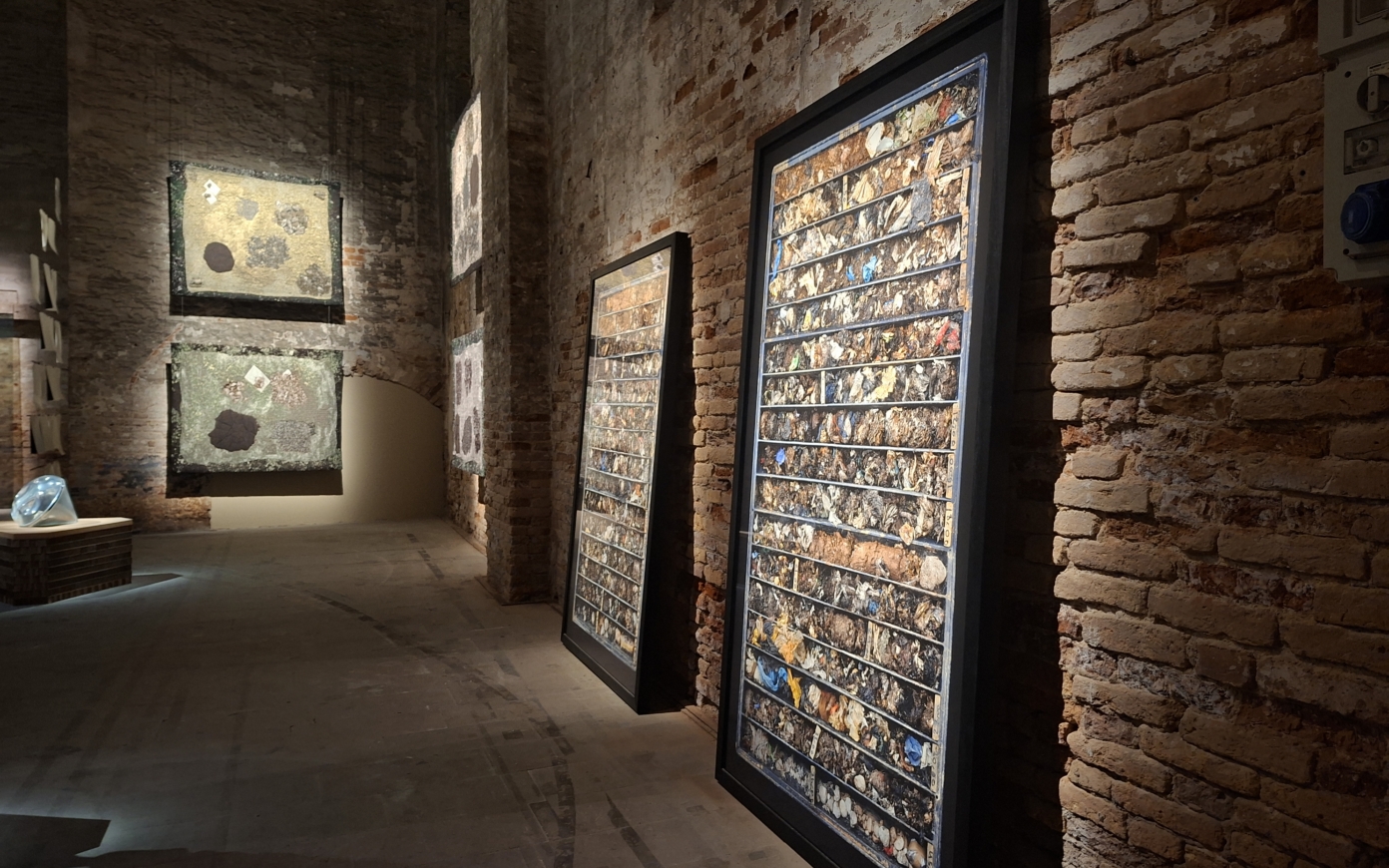
A State, 2019
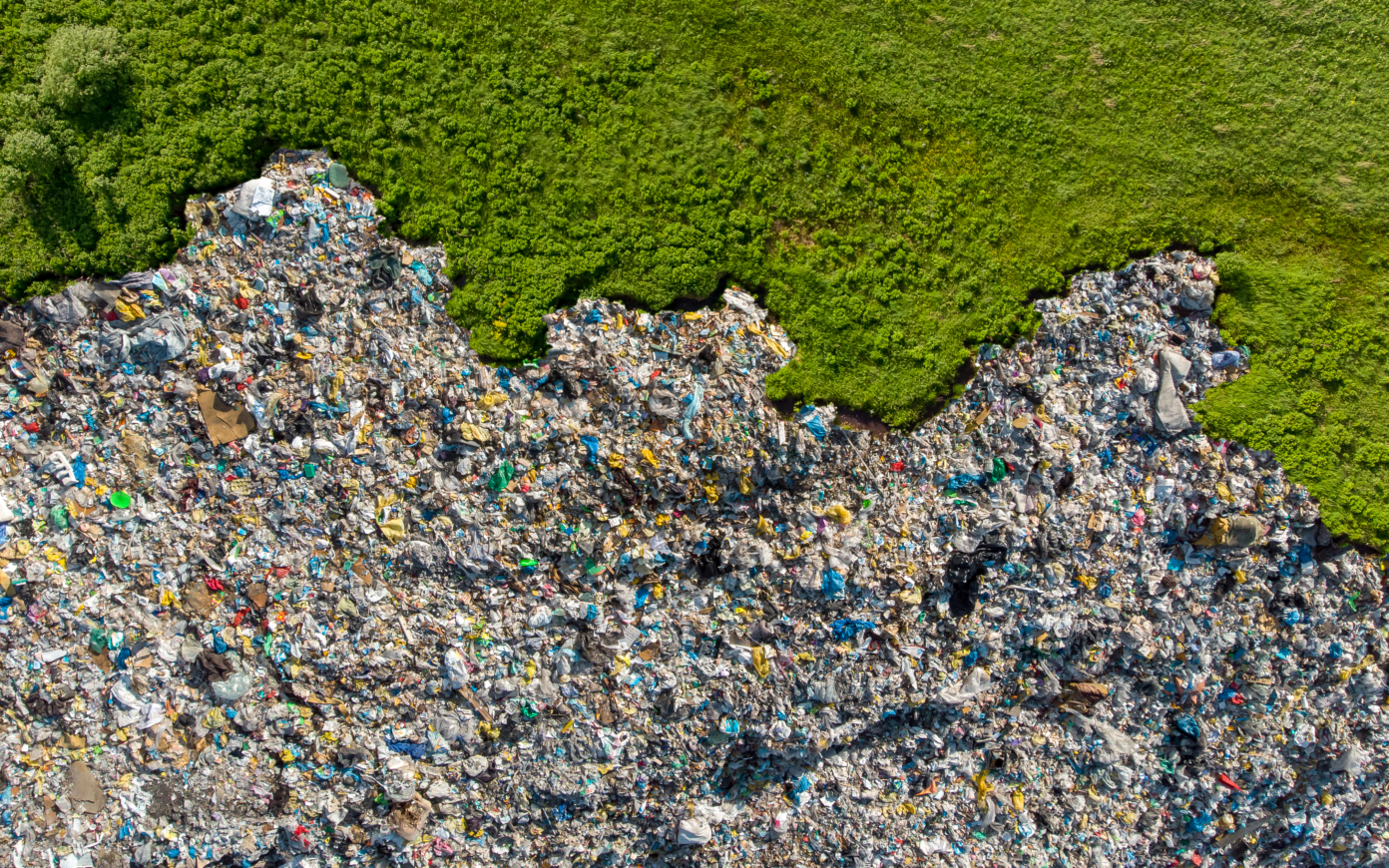
This work features photographic collages created from hundreds of images of the former open-air landfill site in Tripoli, Lebanon. Assembled in such a way as to resemble drill cores, they restore a sense of dignity to the waste, transforming it into archaeological remains.
Blow Up, 2025
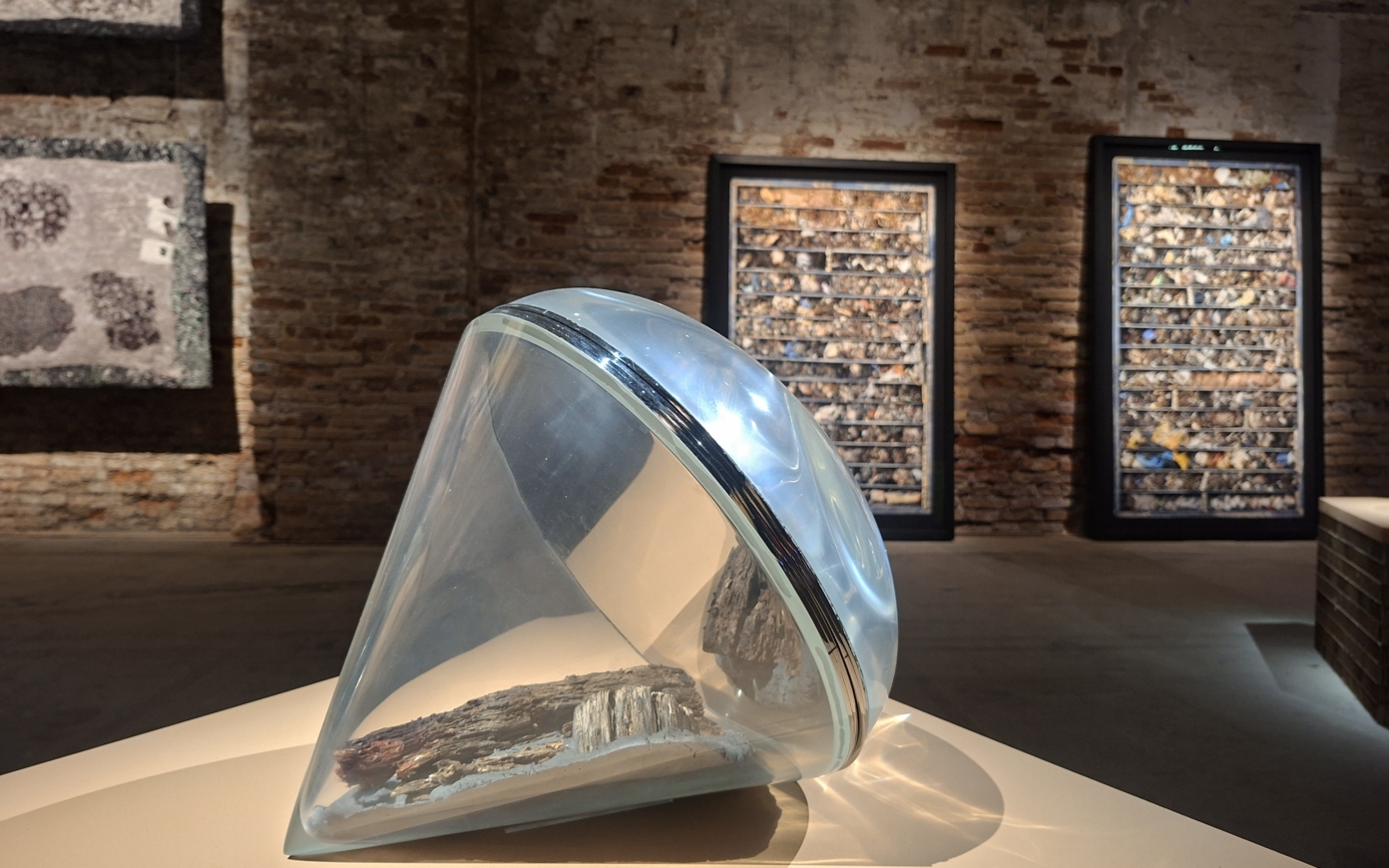
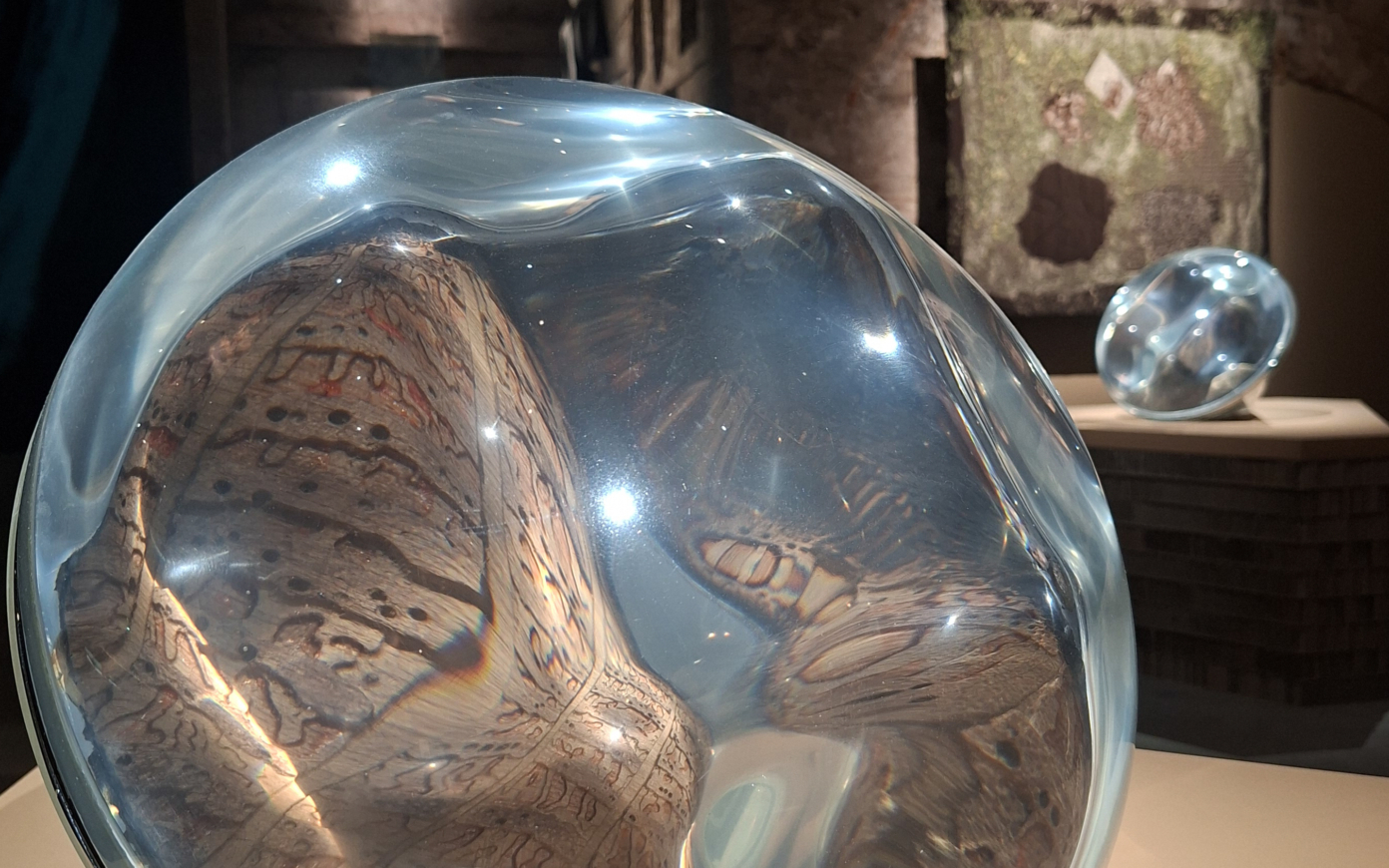
The artists have recreated an archaeological scene under a glass dome, revealing details that are usually invisible to the naked eye. Thanks to the magnifying and distorting effects of the glass, perspectives and scales are radically altered. The installation thus takes the viewer on a fantastical journey through time, verging on the realm of science fiction.
Credits: Unconformities by Joana Hadjithomas & Khalil Joreige. Installation View, In Minor Keys, 61st International Art Exhibition of La Biennale di Venezia. Photography by In Situ – Fabienne Leclerc. Courtesy of the artists and In Situ – Fabienne Leclerc, Grand Paris, and The Third Line, Dubai.