Episode 4/5 – Documentary “PCA-STREAM, from research to action”
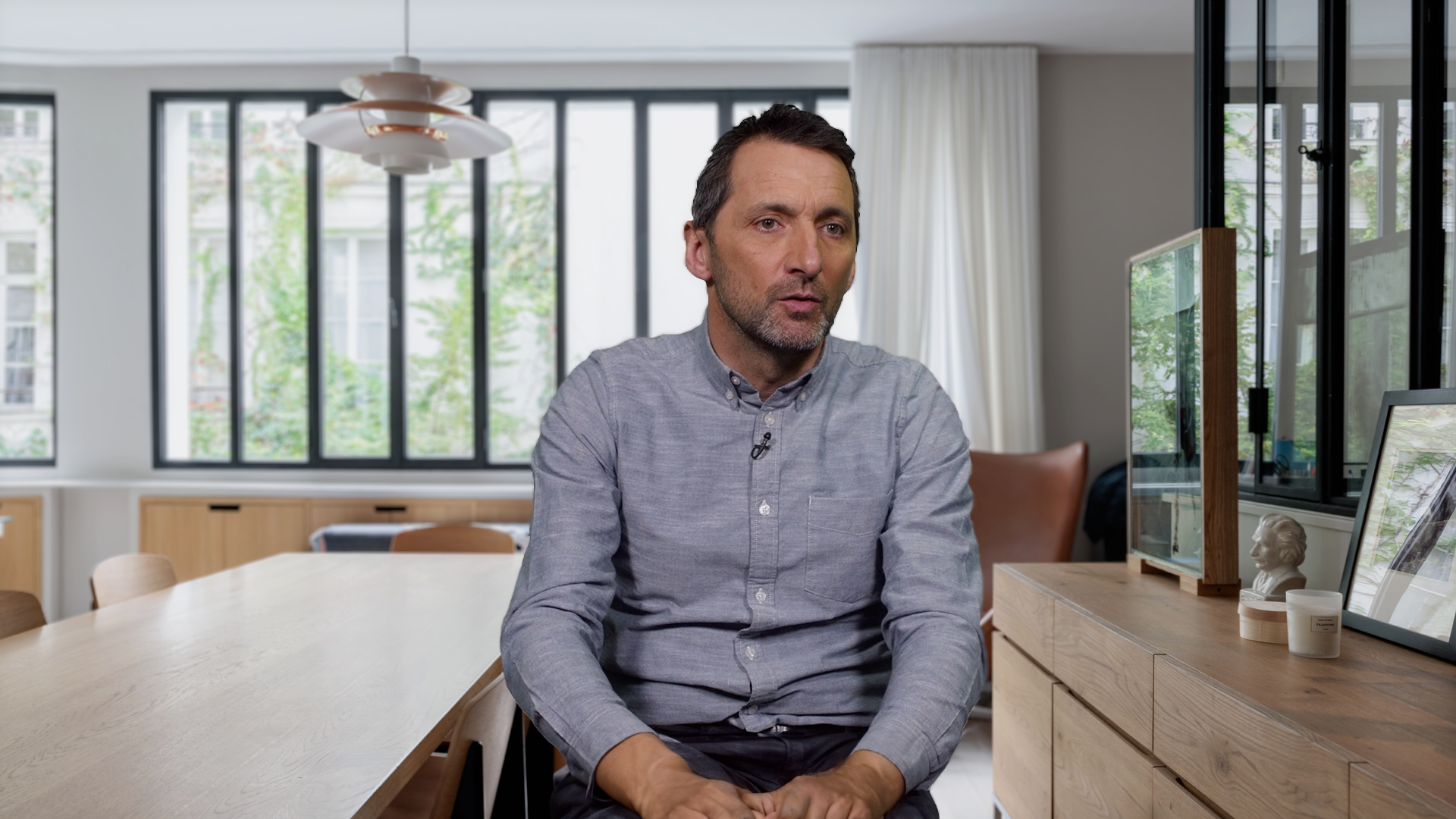
  • Publish On 8 June 2017
  • 12 minutes

The episode 4/5 of the documentary “PCA-STREAM, from research to action” outlines the subject of STREAM 04 (which will be published at the end of 2017). This new issue explores the repercussions of the Anthropocene era. It proposes to consider a new paradigm for the living, seen as a continuum, to overcome the existing divisions between nature and culture, object and subject, living and non-living. The Shake building in Lille, on which a part of the neighboring park winds up and continues, is a concrete example of this new cycle of study.

In the documentary “PCA-STREAM, from research to action”, filmmaker Gilles Coudert takes his author’s perspective, a specialist in contemporary art and architecture, on the link between research and action at the heart of the practice of PCA-STREAM agency. He gives the floor to an international panel of researchers, creators and professionals associated with the work of the agency: philosophers, art critics, artists, investors, policy makers, users, etc.

Three architectural projects, realized or in progress, are taken as case studies to illustrate the conditioning of the architectural form by this collaborative exploration approach: #cloud.paris (with SFL), the Stream Building (winner of the competition « Réinventer Paris » , with Eurosic) and Shake (Euralille, with Nacarat). Those projects embody the way in which a metabolic, open and innovative vision of the city takes shape through the exchange and creation of new synergies between actors and visions to move from urban utopia to concrete realization.

A film directed by Gilles Coudert for the Lyon Architecture Biennial. A co-production PCA-STREAM and a.p.r.e.s. Production, 54 min, 2017.

With the interventions of: Nicolas Bel, engineer, specialist in urban agriculture, founder of Topager – Timothée Boitouzet, architect, entrepreneur, founder of Woodoo – Patrick Bouchain, architect and set designer – Nicolas Bourriaud, art historian, art critic and exhibition curator – Alain Bublex, artist – Thomas Camus, director of operations development at Eurosic – Philippe Chiambaretta, architect, founder of PCA-STREAM – Gilles Clément, landscape designer -Jean-Louis Cohen, architect, architecture historian, professor at Collège de France – Gilles Coudert, director, producer and publisher – Justine Culioli, assistant director of major projects at SFL – Clément Dirié, editor and art critic – Gilbert Emont, director of the Institut Palladio foundation – Julien Eymeri, strategy consultant and co-founder of Quartier Libre – Aurélien Gillier, publisher and designer, editor-in-chief of STREAM 02 – Bertrand Julien-Laferrière, former general manager of SFL – Thomas Lierman, CEO of Nacarat – Éric Mangion, artistic director of the National Contemporary Art Center Villa Arson – Ariane Michel, artist and filmmaker – Jean-Louis Missika, Deputy Mayor of Paris, in charge of town planning, architecture, the Greater Paris project, economic development and attractiveness – Yann Moulier-Boutang, economist and essayist, professor at UTC Compiègne and UTSEUS Shanghai – Pierre Musso, philosopher, professor at Telecom ParisTech – Julien Prévieux, artist – Julie Rouart, editor, editorial director of the art department at Flammarion – David Ruy, architect, director of SCI-Arc post-graduate program, Los Angeles – Xavier Veilhan, artist.

Bibliography

explore

Article

Capturing the Cityscape Through Photography

Émilie d'Orgeix, Corinne Feïss-Jehel, Pierre-Jérôme Jehel

Article

Capturing the Cityscape Through Photography

Over the span of several months, students from GOBELINS Paris scouted La Défense, examining the iconic business district from the fresh perspective of urban metabolism. As part of a documentary workshop led by Pierre-Jérôme Jehel and Laetitia Guillemin (GOBELINS) and designed in partnership with researchers from the City-Metabolism Chair at PSL University, some thirty students explored this territory. They did so by treating it not as a mere backdrop but as a living organism, traversed by flows, tensions, and rhythms, using photography as a tool for revelation. Their projects, located at the crossroads of artistic creation and research, unveil an alternative reading of this mineral space, between invisible flows and underlying tensions. Both sensitive and rigorous, this inquiry is chronicled here by Corinne Feïss Jehel (EPHE-PSL), Pierre-Jérôme Jehel, and Émilie d’Orgeix (EPHE-PSL) as part of a research project conducted by the City-Metabolism Chair (which is financially supported by PCA-STREAM, Artelia, and Groupama Immobilier).

Discover
Vidéo

Matthieu Duperrex

Vidéo

Inhabiting Sentinel Landscapes

A philosopher and senior lecturer at the National School of Architecture of Marseille, Matthieu Duperrex explores ‘sentinel landscapes’—polluted soils, engineered rivers, industrial port zones—from a decolonial, multidisciplinary perspective attentive to the various ways of narrating the damaged world we have inherited. He regards these sites both as places of warning and as spaces of knowledge.

Discover
Vidéo

Björn Geldhof

Vidéo

Culture as a weapon

In this exclusive interview, Björn Geldhof, director of the PinchuckArtCentre in Kyiv, looks at the evolution of the centre’s cultural programming since the outbreak of war in Ukraine. From an institutional space whose primary role was to open up the country to the world, the centre has evolved into a platform for committed and activist research, carrying the voice of Ukraine throughout Europe. By using art to document the conflict, the PinchukArtCentre uses a factual approach to raise awareness in the spheres of opinion and decision-making, thus affirming its role as the country’s ‘artistic arm’.  

Discover
Vidéo

Jean-Baptiste de Froment

Vidéo

"For an open architecture"

On the occasion of its integration into the Paris Sciences et Lettres (PSL) university consortium, the École nationale supérieure d’architecture de Paris-Malaquais is publishing a manifesto that asserts its institutional positioning. Far more than a mere text, this manifesto lays the foundations for a committed academic vision, emphasizing the urgent need to train architects engaged in transforming the ways we inhabit the world. Structured around twelve key concepts, it is intended as a compass to guide the school’s pedagogical and strategic choices, in alignment with the 2025–2029 National Strategy for Architecture. In this interview, its director, Jean-Baptiste de Froment, reflects on the values driving this project and on how the school positions itself as a proactive agent of thought and action within the contemporary architectural landscape.

Discover
Podcast

“ My research question was: How do tools for integrating biodiversity into urban and architectural projects contribute to shaping multi-species urban worlds? ”

Translating biodiversity

Léone-Alix Mazaud

Podcast

“ My research question was: How do tools for integrating biodiversity into urban and architectural projects contribute to shaping multi-species urban worlds? ”


Translating biodiversity

In this first episode, Léone revisits the genesis of her research topic and traces the evolution of her methodology. She adopts a “material semiotics” approach, focused on how biodiversity tools translate and make ecological knowledge perceptible. These tools are analyzed as “cosmograms,” according to John Tresch’s concept: objects designed to summarize the order of the world by materially organizing the relationships between humans and non-humans. But an examination of the diversity of these tools quickly reveals the difficulty in producing shared representations of biodiversity. This heterogeneity opens an investigation into the often implicit ways in which these tools shape our thinking and conceptions of the multi-species city.   Working with diversity: Operators sensitive to non-human life in urban and architectural projects In this series of four podcasts, we invite you to delve into the work of Léone, a researcher at the agency, who recently defended her CIFRE PhD thesis in Science and Technology Studies, supervised by Jérôme Denis at the Centre for the Sociology of Innovation (École des Mines, Université PSL). A series presented by Léone-Alix Mazaud and Jasmine Léonardon. Editing: Théa Lingrand.

Discover
Article
Article

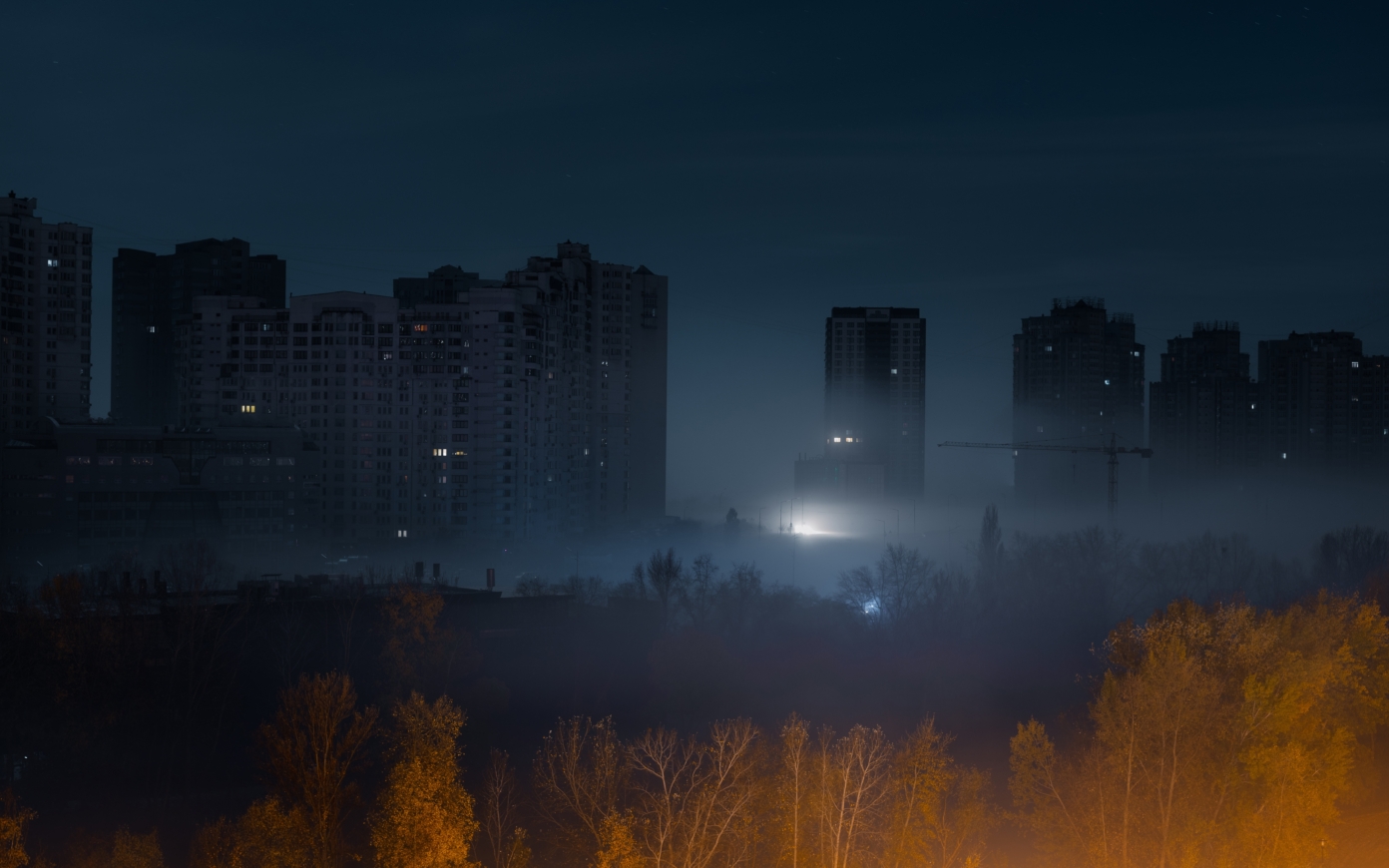
The potential of the night

Once a sanctuary for dreams and imagination, nighttime has now been relegated to the mere role of a utilitarian prelude to daytime. Nocturnal realms possess an alchemical power capable of transfiguring our perceptions. However, when viewed through the lens of urban uses, the night also exacerbates inequalities and raises questions about the possibility of achieving an urban night that is accessible to everyone. Exploring the range of possibilities associated with the night reveals it as a space-time where complex interactions are woven that could be revitalized through a chronotopic and inclusive architecture.

Discover
Vidéo
Vidéo

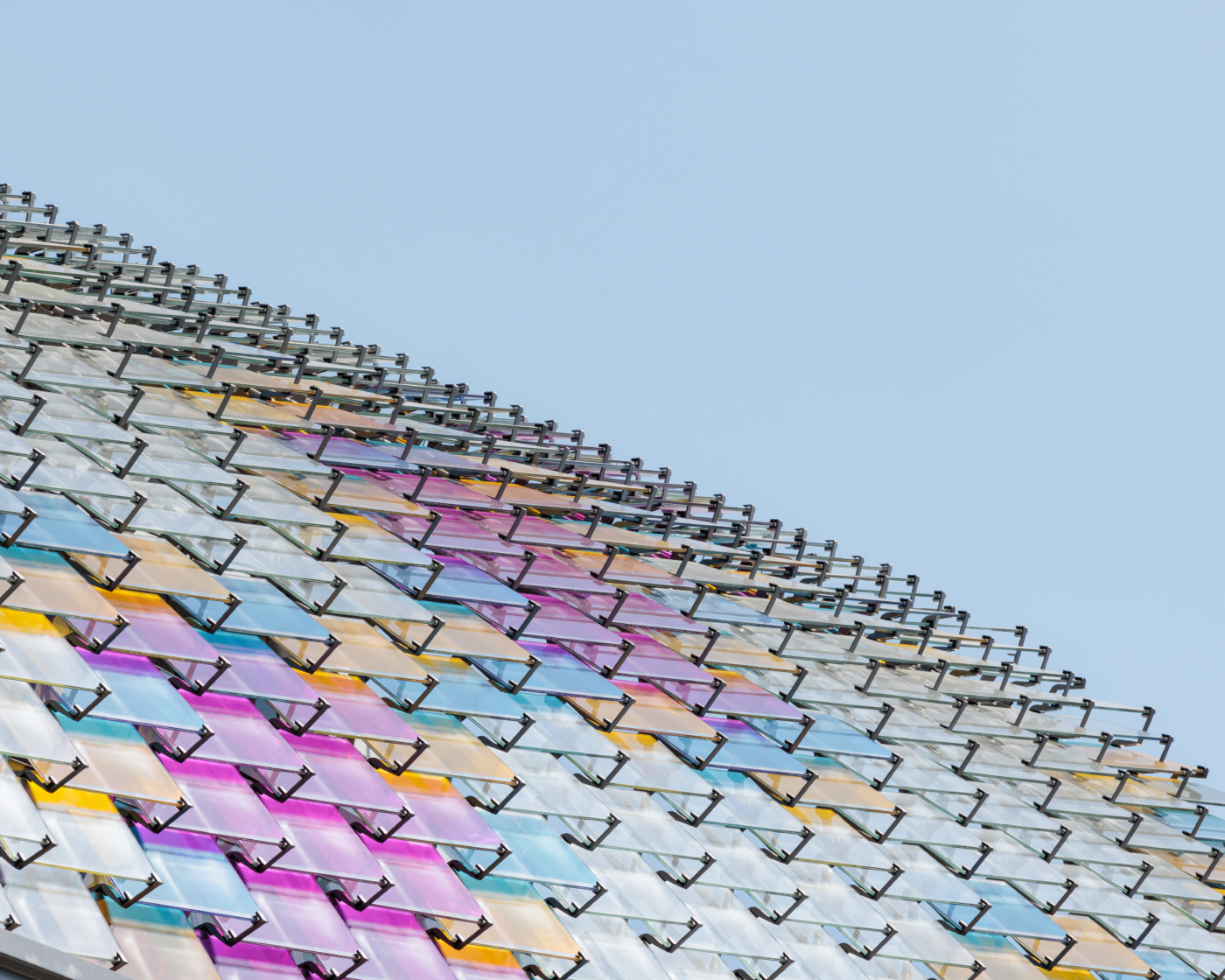
Beautiful like an encounter on the glass roof of colored clouds

For Daniel Buren, architecture is an open-air studio. In an exclusive interview with architect Philippe Chiambaretta, he talks about his site-specific work, where art and architecture meet, just like the Nuages Colorés that cover the scales of the 175 Haussmann glass roof.

Discover
Article
Article

Educating Citizen Architects: for a meaningful architecture

Andrew Freear runs the Rural Studio program at Auburn School of Architecture (USA). He believes that schools of architecture have an ethical responsibility to train citizen architects who are locally committed to concrete projects and experientially connected to contexts and places. To design an inclusive city, the Studio adopts an experimental field approach, combining analysis of the territory’s endemic problems, understanding of residents’ needs and new construction techniques. Read the full interview published in STREAM 05!

Discover