Reinventing Ways of Learning
  • Publish On 7 October 2021
  • François Taddei

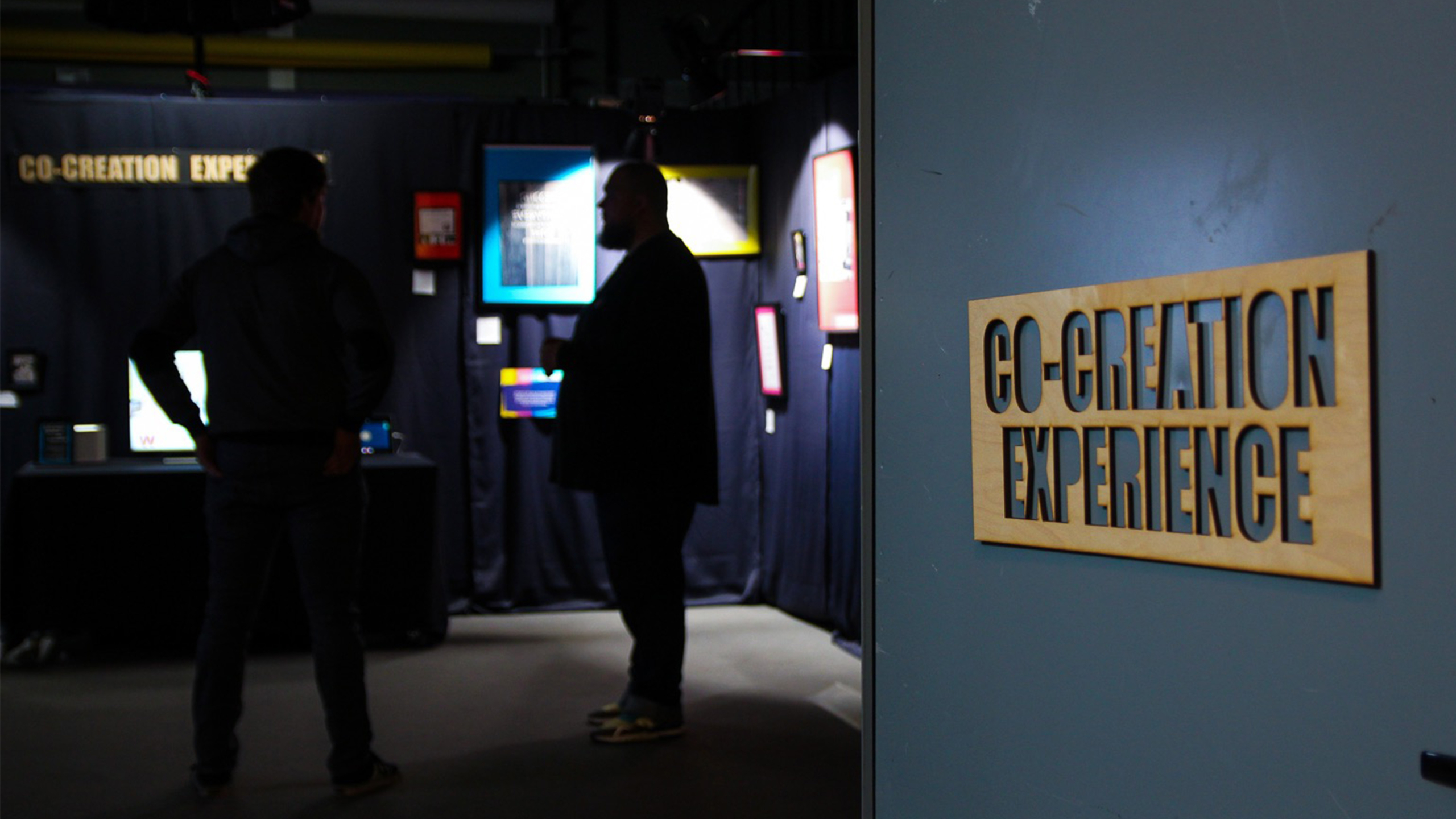
The complexity of today’s global challenges entails new ways of understanding the world and acting upon it. Trained as a geneticist, François Taddei showcases the way in which the Centre for Research and Interdisciplinarity (CRI), which he co-founded, provides an adaptable middle ground between activism and institutions, to reinvent new ways of learning, conducting research, and mobilizing collectives in order to take care of themselves, each other, and the planet. Basing their minimum disciplinary curriculum around the three major fields of biological, artificial, and human intelligence, as well as their co-evolutions, CRI calls for a multidisciplinary methodology based on the experience of doing. The fundamentals of the teaching of the future are largely the same as those underlying our overall survival, such as awareness of planetary limits and the development of collective intelligence.

Soon available in open access.

Order the book-magazine

Bibliography

explore

Podcast

“ Artificial intelligence is revolutionizing our relation to history, giving us access to previously indecipherable archives. ”

Using AI to tell history

Raphaël Doan

Podcast

“ Artificial intelligence is revolutionizing our relation to history, giving us access to previously indecipherable archives. ”


Using AI to tell history

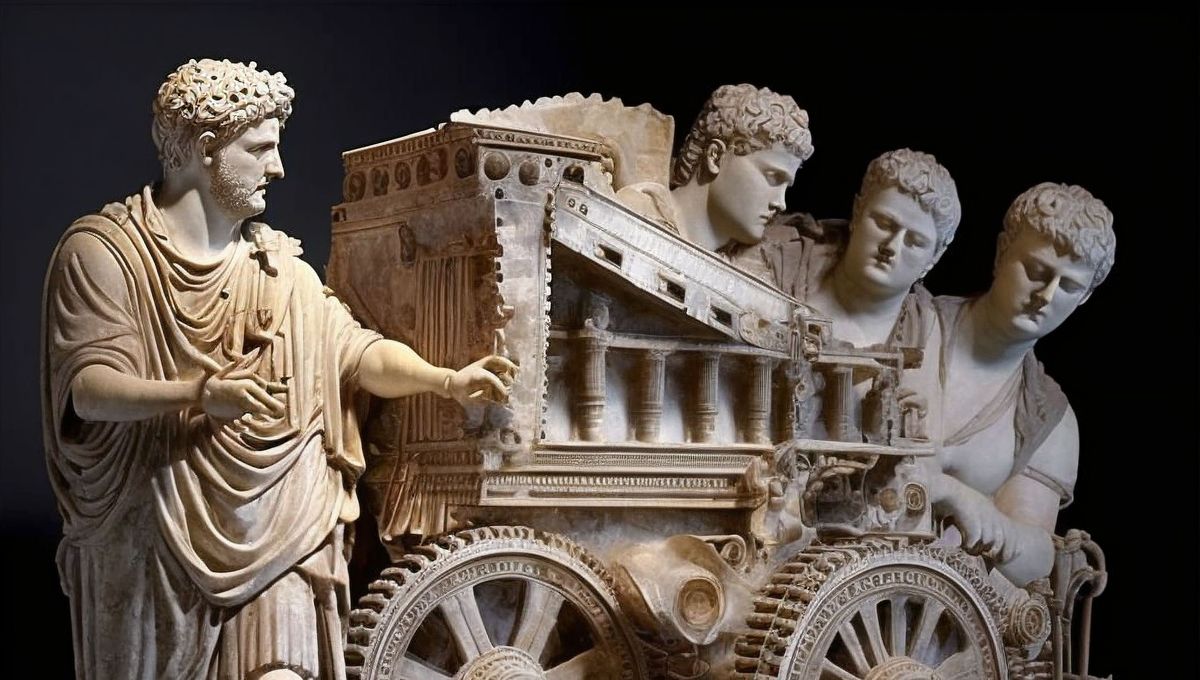
On February 10 and 11, France hosted the Summit for Action on Artificial Intelligence, bringing together international companies and heads of state to identify the potential and limits (notably environmental) of this tool. This is an opportunity for us to discuss the subject of generative AI with Raphaël Doan, a specialist in the sciences of Antiquity and author of the uchronia Si Rome n’avait pas chuté (If Rome hadn’t fallen), an essay imagining, with the help of AI, what might have happened if the Industrial Revolution had taken place under the Roman Empire. Through this experiment, fascinating possibilities for historical and archaeological research are outlined, as AI facilitates the processing of archives, the translation of lost languages and the deciphering of burnt texts. Read here the transcription of our interview with Raphaël Doan

Discover
Article
Article

Podcast transcript: urban metabolism, at the heart of the matter

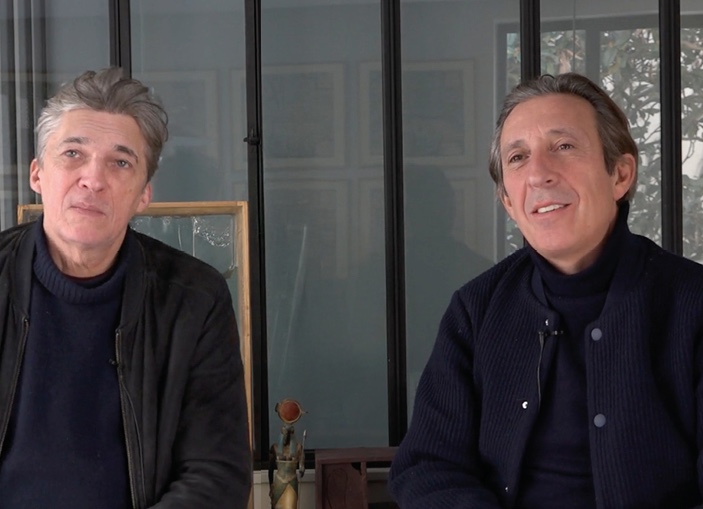
In urban planning and geography, the concept of metabolism is frequently discussed. This organicist metaphor likens a territory to a body, traversed by flows of materials and energy that link it to its environment. From a quantitative perspective, these flows can be measured over time and space to assess what a territory consumes, processes, and produces. However, a qualitative approach is equally crucial, examining the political and social trade-offs that shape urban metabolisms. With this in mind, we spoke with two researchers, Clément Dillenseger and Pierre Desvaux, who have explored the waste sector to analyze the socio-technical infrastructures that underpin metabolism and the imaginaries that shape its perception.

Discover
Article
Article

Reshaping myths to reveal pressing realities

Ashfika Rahman is a visual artist based in Bangladesh, who recently won the Future Generation Art Prize awarded by the PinchukArtCentre in Ukraine. Faced with the overwhelming power of information systems that are serving dominant narratives, she is working on creating alternative medium of expression, giving their voice back to marginalized communities in her homeland, particularly women. Through her art, Rahman questions myths, folk tales and widely spread prejudice that are still shaping our cultures and legitimating violence, adopting a contemporary and feminist lense. We met with her to discuss her recent work, Behula These Days where she brings together ancient crafts and new techniques to share the poignant and heart-wrenching experiences of women living in one of the most floodprone areas in Bangladesh.

Discover
Podcast

“ En architecture, le sonore demeure une dimension à la fois floue et insaisissable. Il échappe au dessin et au plan, et pourtant, c’est lui qui fait vibrer l’espace, qui le rend habitable et mémorable.  ”

Podcast

“ En architecture, le sonore demeure une dimension à la fois floue et insaisissable. Il échappe au dessin et au plan, et pourtant, c’est lui qui fait vibrer l’espace, qui le rend habitable et mémorable.  ”


Sound, the Great Forgotten Dimension of Architectural Practice

Carlotta Daro co-led, together with Nicolas Tixier, the Radio Utopia project that animated the French Pavilion at the Venice Biennale in 2023. She is now part of the Gramazio Kohler research group, which focuses on the contribution of digital technologies and new materials to architectural design. There, she leads a research project dedicated to developing virtual reality tools enriched with acoustic simulations, designed to support architects throughout their creative process. This work paves the way for a constructive approach in which sound—too often considered primarily as a nuisance—moves beyond measurement and mitigation to become a perceptual and experiential factor.

Discover
Vidéo
Vidéo

Beautiful like an encounter on the glass roof of colored clouds

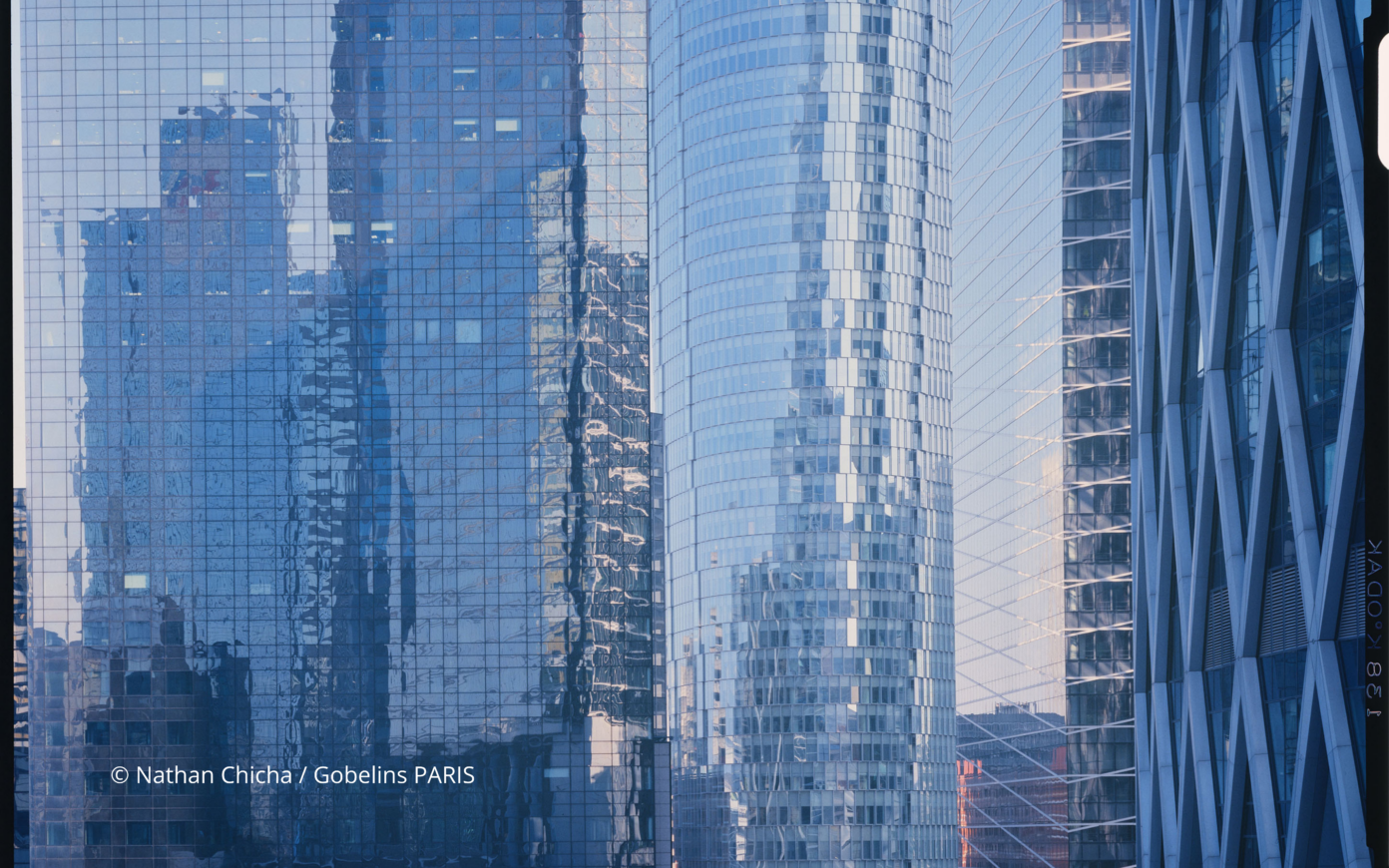
For Daniel Buren, architecture is an open-air studio. In an exclusive interview with architect Philippe Chiambaretta, he talks about his site-specific work, where art and architecture meet, just like the Nuages Colorés that cover the scales of the 175 Haussmann glass roof.

Discover
Podcast

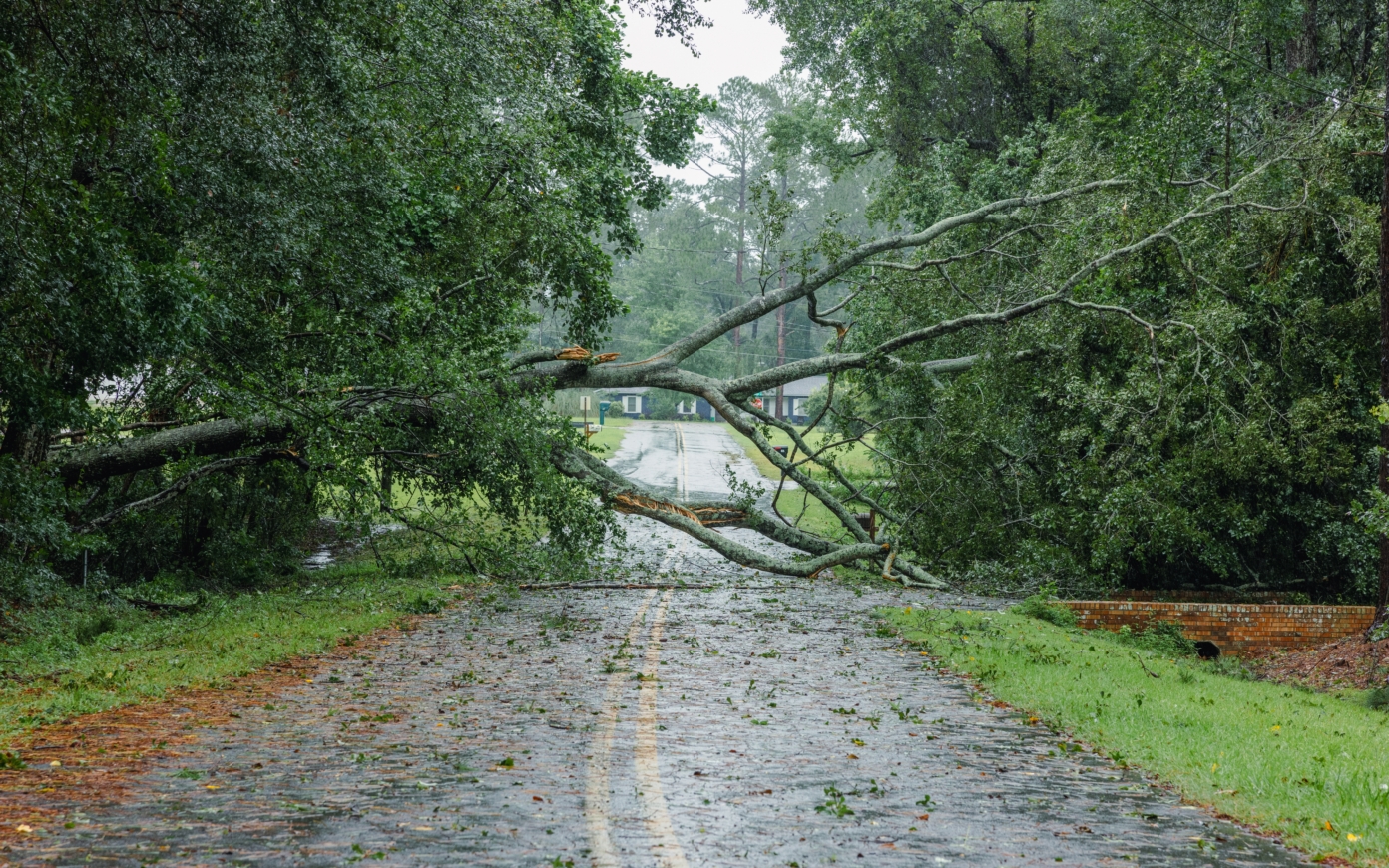
“ A catastrophe is when a belief or certitude suddenly collapses. From its ruins, narrative, political, economic and ecological utopias can be reborn. ”

Podcast

“ A catastrophe is when a belief or certitude suddenly collapses. From its ruins, narrative, political, economic and ecological utopias can be reborn. ”


Can new narratives arise from ruins?

Raphaëlle Guidée is a specialist in narrative representations of economic, environmental and societal collapse. For over 10 years, she has analyzed the narratives surrounding Detroit’s bankruptcy in order to understand how an apparent ruin of capitalism can inspire discourses of domination or resistance. In La ville d’après : Détroit, une enquête narrative [The Aftermath City: Detroit, a narrative investigation] (Flammarion), rather than focusing on fictions, she seeks out testimonies and concrete stories, believing that modern times don’t need new narratives. We simply need alternative narratives. Read the transcription of the podcast.

Discover
Vidéo
Vidéo

Bringing together an architectural project and a collection project 

L’agence PCA-STREAM dirigée par l’architecte Philippe Chiambaretta a signé en 2006 le projet de réhabilitation d’un immeuble tertiaire destiné à accueillir le tout nouveau Centre d’Art Contemporain de Kiyv. Le projet architectural s’est construit en parallèle du positionnement éditorial et de la constitution de la collection, en collaboration étroite avec le mécène du projet Viktor Pinchuk et le curateur Nicolas Bourriaud. Retour sur la genèse de ce projet ambitieux, destiné à ouvrir l’Ukraine sur le Monde.

Discover
Vidéo

Matthieu Duperrex

Vidéo

Inhabiting Sentinel Landscapes

A philosopher and senior lecturer at the National School of Architecture of Marseille, Matthieu Duperrex explores ‘sentinel landscapes’—polluted soils, engineered rivers, industrial port zones—from a decolonial, multidisciplinary perspective attentive to the various ways of narrating the damaged world we have inherited. He regards these sites both as places of warning and as spaces of knowledge.

Discover