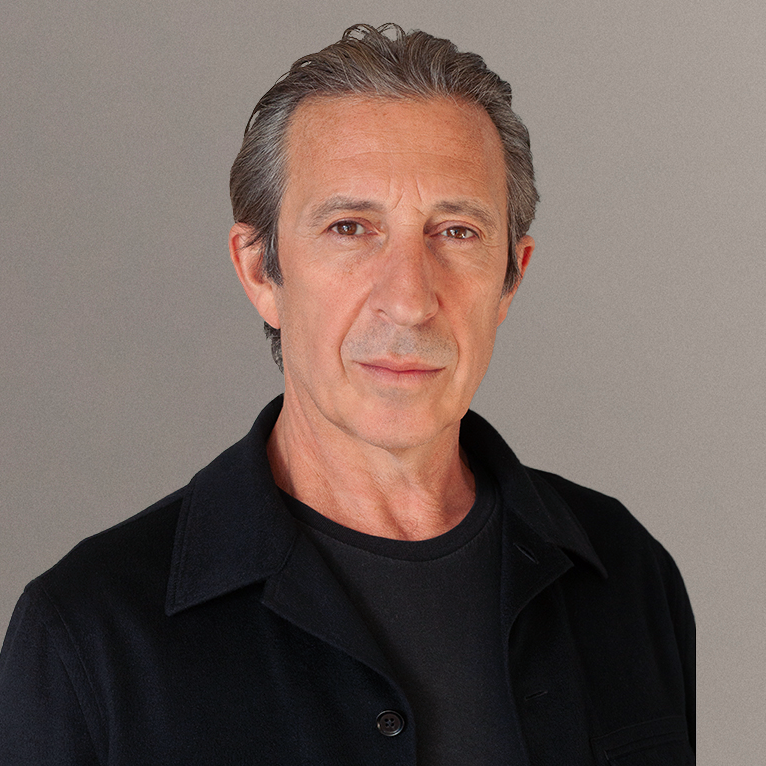
Intervention by Philippe Chiambaretta during the Scenari futuri session at the Fondazione Luigi Rovati, Milan
- Publish On 27 November 2025
Conference – Museums and the Ecological Transition
Philippe Chiambaretta, Fondazione Luigi Rovati, Milan — 27 November 2025
Invited to speak during the Scenari futuri session of the symposium I Musei nella sostenibilità. Necessità e opportunità, Philippe Chiambaretta presented PCA-STREAM’s vision for transforming museums in the context of the climate emergency.
Drawing on the agency’s research and on a precise assessment of the cultural sector’s environmental impacts, he recalled that museums are among the most complex buildings to decarbonize. Their energy consumption—largely driven by climate control, lighting, and visitor flows—calls for a rigorous architectural and methodological response.
Philippe Chiambaretta structured his talk around three key priorities:
Rethinking buildings to reduce their actual environmental footprint.
Museums must integrate low-carbon strategies at every scale: materials, thermal inertia, differentiated façades, prefabrication, reuse, and optimized energy management. For the cultural sector, the ecological transition begins with architecture itself.
Revisiting conservation standards.
Established several decades ago, current climatic standards (temperature and humidity) lead to extremely high energy use. Their revision—already initiated by ICOM and the Bizot Group—opens the way to more contextual, less energy-intensive conservation practices that do not compromise the integrity of collections.
Positioning museums as cultural drivers of the transition.
Beyond technical exemplarity, museums play a crucial role in shaping new collective imaginaries. Through their programming, architecture, and relationship to their territories, they can become key actors in the cultural shift required by the ecological transition.
Philippe illustrated these principles through the Centre Pompidou Francilien – Fabrique de l’Art, designed by PCA-STREAM as a model combining stringent museological requirements with constructive sobriety and a bioclimatic approach—from geological concrete to passive climate-control strategies.
This intervention forms part of the agency’s broader commitment to imagining more responsible, more adaptable, and more desirable cultural institutions, aligned with today’s environmental challenges.